
Universal Jurisdiction over International Crimes: Legitimacy, Political Misuse and Procedural Safeguards.
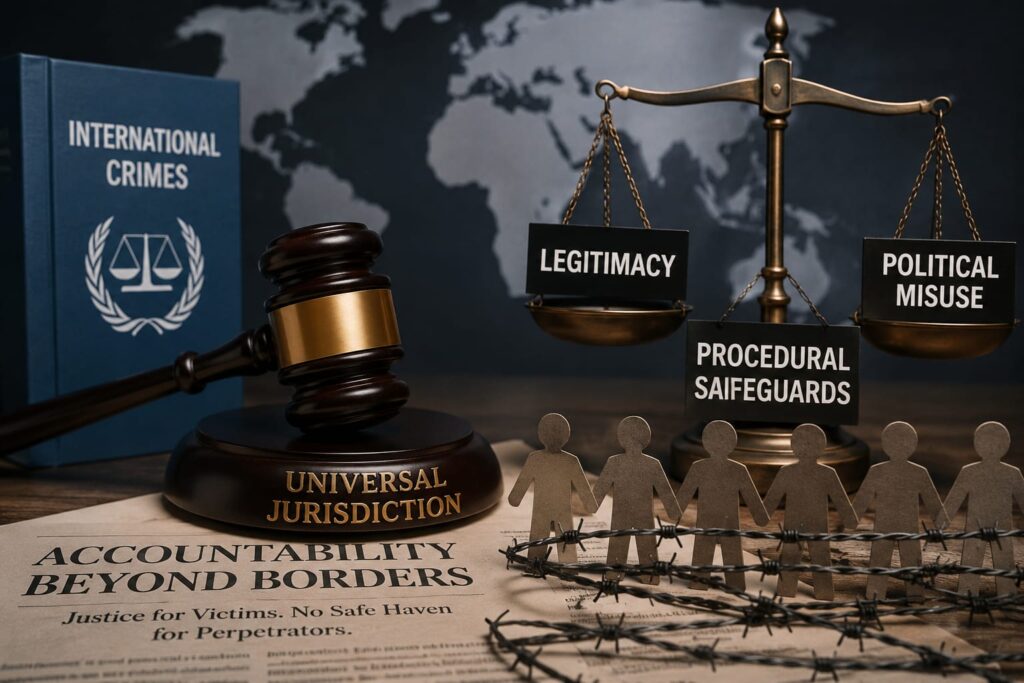
Introduction There is something almost radical about the idea of universal jurisdiction. It says that certain crimes are so grave, so offensive to the conscience of humanity, that any state on earth can prosecute the perpetrator, regardless of where the crime happened, who committed it, or which nationality the victim held. No territorial link is […]
Cross-Border Defamation on Social Media: Jurisdiction, Choice of Law and Enforcement of Foreign Judgments
Governing Law & Relevant Framework Core Doctrine: Lex loci delicti and the “place of publication” test for internet defamation (Dow Jones & Co Inc v Gutnick, [2002] HCA 56) Indian Jurisdiction Standard: “Purposeful availment,” not mere accessibility — Banyan Tree Holding v A. Murali Krishna Reddy, 2009 SCC OnLine Del 3780 Statutory Anchor: Section 356, […]
Constitutional Safeguards Against Wrongful Arrests in India: Analyzing the BNSS Framework and Judicial Oversight.

Abstract Wrongful and arbitrary arrest remains one of the most persistent threats to personal liberty in India, striking directly at the guarantees enshrined in Article 21. This article examines the constitutional architecture protecting individuals from unlawful arrest, traces the evolution from the Code of Criminal Procedure (CrPC), 1973 to the Bharatiya Nagarik Suraksha Sanhita (BNSS), […]
THE OFFENCE OF MOB LYNCHING UNDER SECTION 103(2) BNS: Analysing the Statutory Elements, Enhanced Penalties, and Evidentiary Challenges in Collective Violence Trials:

PREFACE: Imagine a little town where there’s a rumour running round that a stranger is a kidnapper. In an hour, he gets surrounded by 30 people, and he is beaten to death before the police arrive. If a man throws the first blow, and all the rest join him in beating, who is to blame […]
Transparency on Trial: The Right to Information Act and Judicial Accountability in India
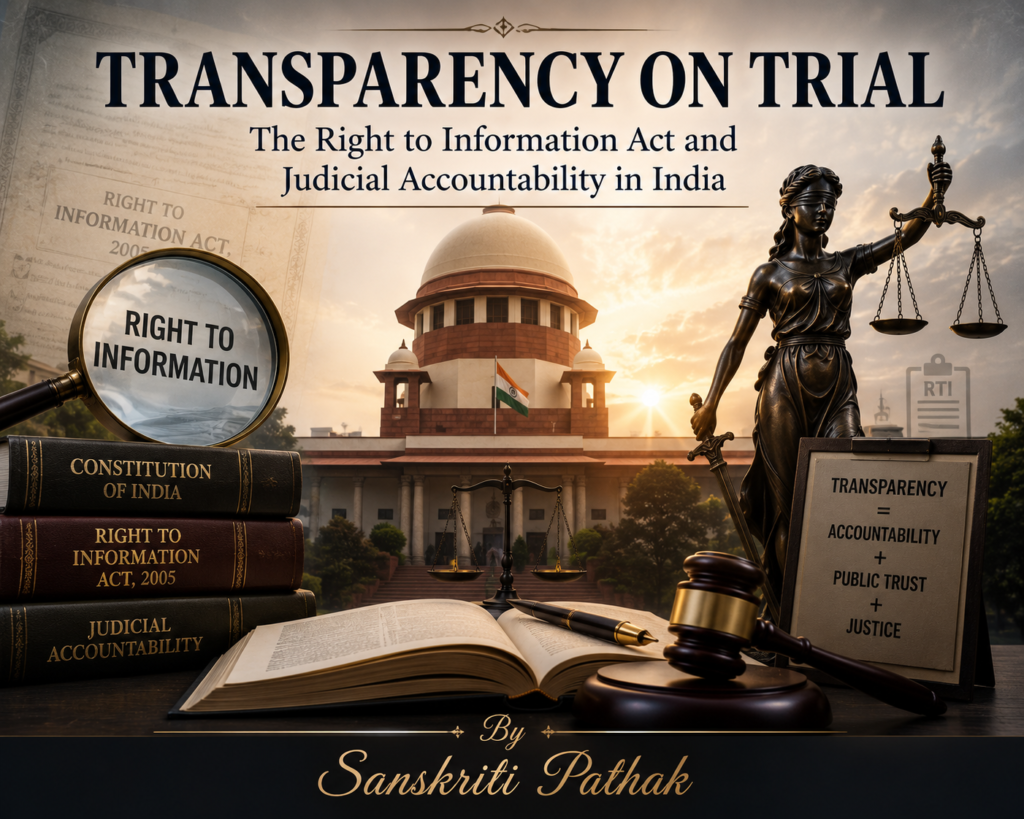
Transparency on Trial: The Right to Information Act and Judicial Accountability in India A Critical Analysis of Transparency, Judicial Independence, and the Public’s Right to Know Abstract The Right to Information Act, 2005 (RTI Act) represents one of India’s most transformative legislative measures aimed at promoting transparency, accountability, and participatory governance. By recognizing citizens’ right […]
From Imprisonment to Restoration: A Critical Analysis of Community Service as a Non-Custodial Sentence under the BNS and BNSS, 2023
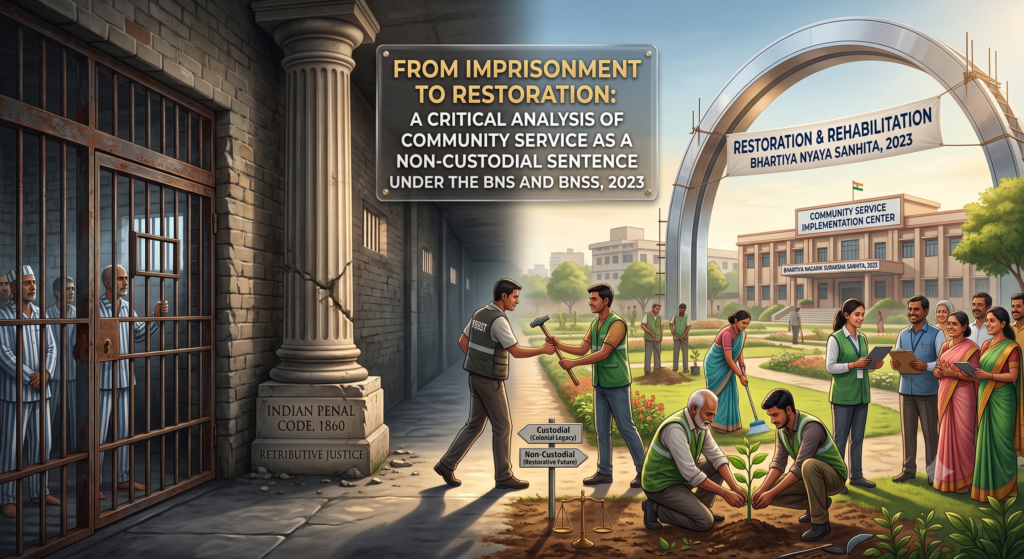
Introduction India’s prison system is in crisis. As of December 2022, the National Crime Records Bureau’s Prison Statistics India report recorded an overall prison occupancy rate of 131.4%, meaning that Indian prisons collectively held a third more inmates than their combined capacity. Undertrials persons awaiting trial who have not been convicted of any offence accounted […]
What are the legal boundaries of the ‘Right to be Forgotten’ for expunging past criminal records online?

Abstract In the digital age, information published on the internet often remains permanently accessible, creating significant challenges for individuals seeking rehabilitation after involvement with the criminal justice system. Search engines, online news portals, and legal databases continue to display criminal records long after acquittal, completion of sentence, or closure of proceedings, thereby affecting employment opportunities, […]
Arbitrary Arrest and Enforced Disappearance under International Human Rights Law And Criminal Law
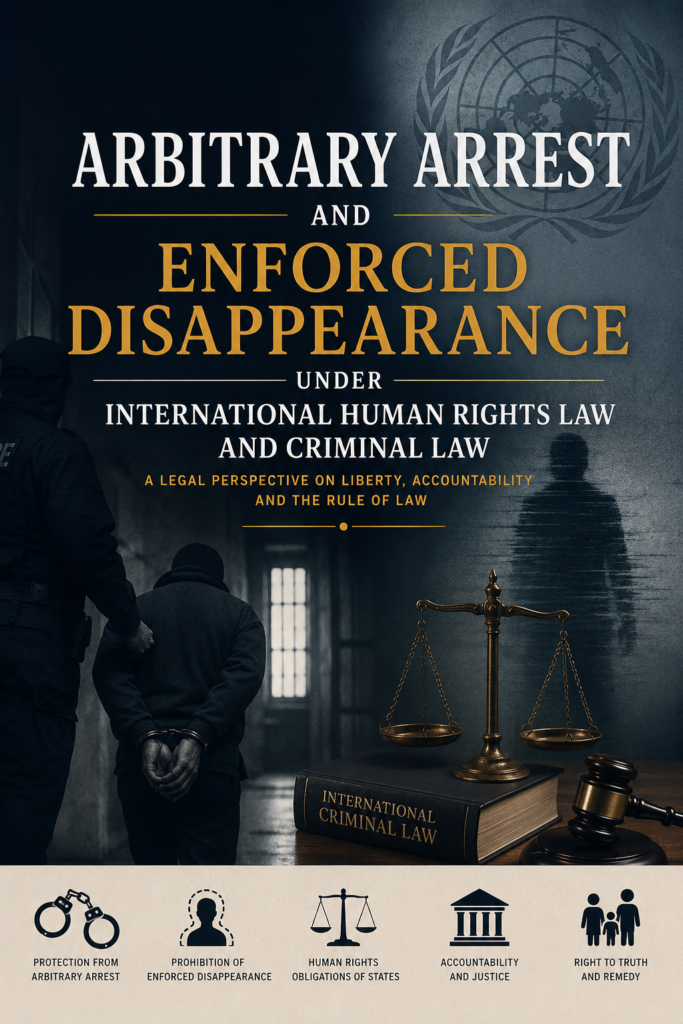
Introduction Arbitrary arrest and enforced disappearance are two of the gravest human rights violations that exist under international law. They threaten the rule of law, violate fundamental rights, and serve to facilitate other serious human rights abuses like torture, extrajudicial execution and long-term, unlawful detention. In the past few decades, an extensive legal framework has […]
Immunities of State Officials before Foreign Courts:The tension between Sovereignty and Accountability for Atrocity Crimes.
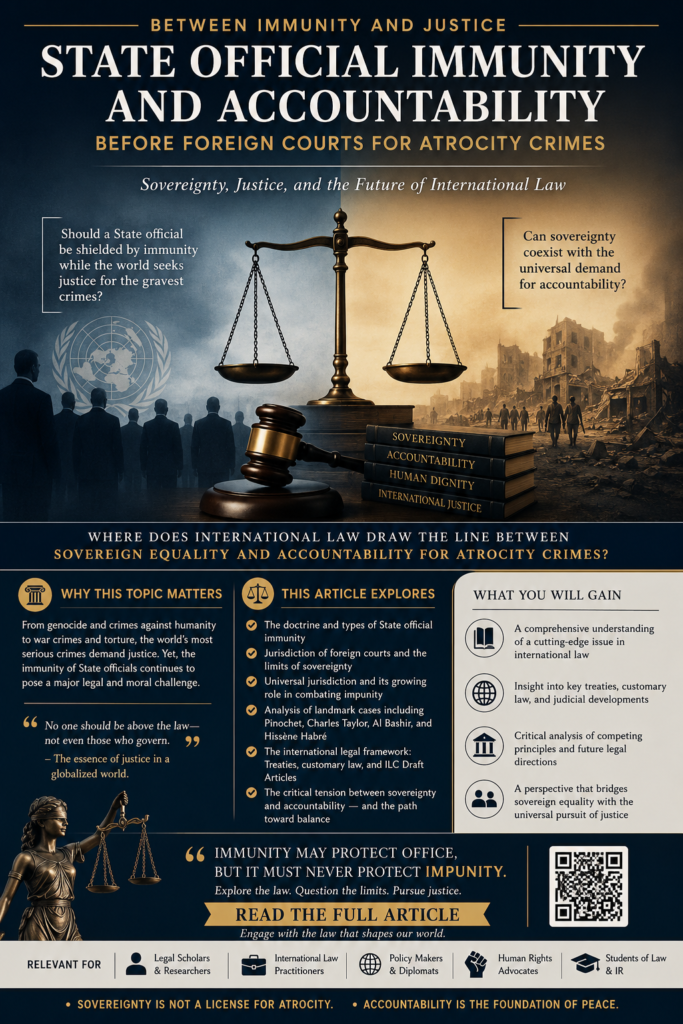
Immunities of State Officials before Foreign Courts:The tension between Sovereignty and Accountability for Atrocity Crimes. Abstract The doctrine of State official immunity occupies a central position in international law by protecting certain State officials from the jurisdiction of foreign courts. Its primary purpose is to preserve the sovereign equality of States, facilitate diplomatic relations, and […]
A Comparative Analysis of India and the United States on DYING DECLARATIONS under BHARATIYA SAKSHYA ADHINIYAM 2023

ABSTRACT The law of evidence provides the foundation for the justice delivery system, as it is necessary for courts to have trustworthy and relevant material to consider in deciding cases. Dying declarations stand alone in the list of exceptions to the hearsay rule. The basis of the admissibility of such statements is the legal maxim […]