
“Sovereign Debt Restructuring and International Law: Balancing Creditors’ Rights and Economic Self-Determination”

“Sovereign Debt Restructuring and International Law: Balancing Creditor Rights with Economic Self-Determination” Abstract: The increasing number of sovereign debt crises has highlighted significant weaknesses in the existing international debt restructuring framework. Growing cross-border financial transactions, complex borrowing patterns, and the absence of a comprehensive international legal mechanism have made sovereign debt restructuring more challenging than […]
Odious Debt in International Law: Should Successor Governments Be Bound by Illegitimate Sovereign Borrowing?
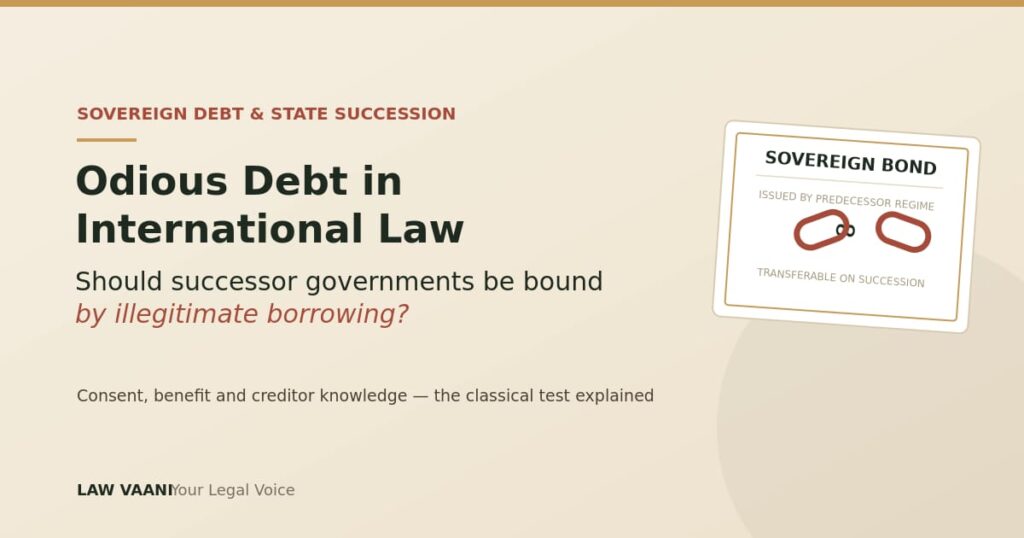
Odious Debt in International Law: Should Successor Governments Be Bound by Illegitimate Sovereign Borrowing? When a dictatorship falls or an occupying power withdraws, the loans that regime took out don’t disappear with it. Creditors still expect repayment, and international law has traditionally treated state debt as attaching to the state itself, regardless of who governs […]
Transfer Pricing and Arm’s Length Price in MNC Transactions: An Analysis of MAP, Safe Harbor Rules, and Transfer Pricing Audit Defence in India
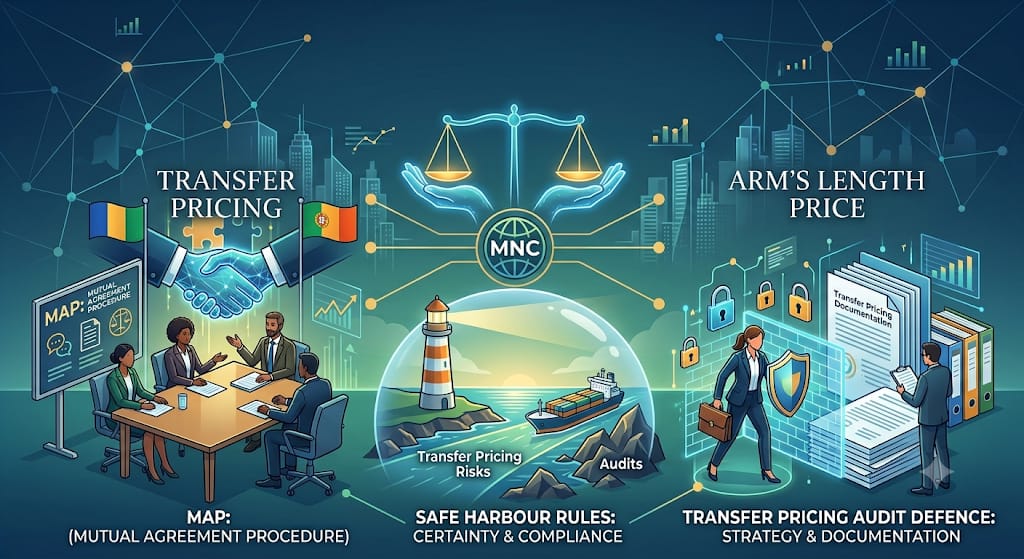
Transfer Pricing and Arm’s Length Price in MNC Transactions: An Analysis of MAP, Safe Harbor Rules, and Transfer Pricing Audit Defence in India Abstract The expansion of multinational enterprises has made transfer pricing a central issue in international taxation. As corporate groups increasingly conduct cross-border transactions through related entities, tax authorities must determine whether profits […]
Challenging Income Tax Reassessment Notices under Section 148: Procedural Lapses, Supreme Court Guidelines, and Judicial Review under Article 226
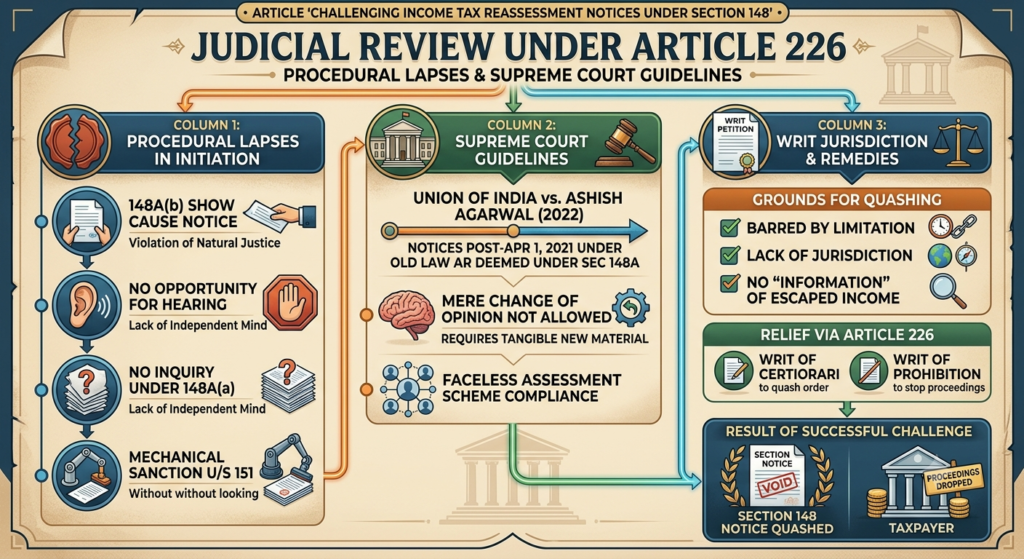
Challenging Income Tax Reassessment Notices under Section 148: Procedural Lapses, Supreme Court Guidelines, and Judicial Review under Article 226 Author – Saachi Srivastava Abstract The reassessment process envisaged under the Income Tax Act, 1961, has assumed significant importance in the context of maintaining the balance between revenue collection and taxpayer rights. While the 2021 Finance […]
Third-Party Funding (TPF) in Indian Arbitration: examining the regulatory vacuum
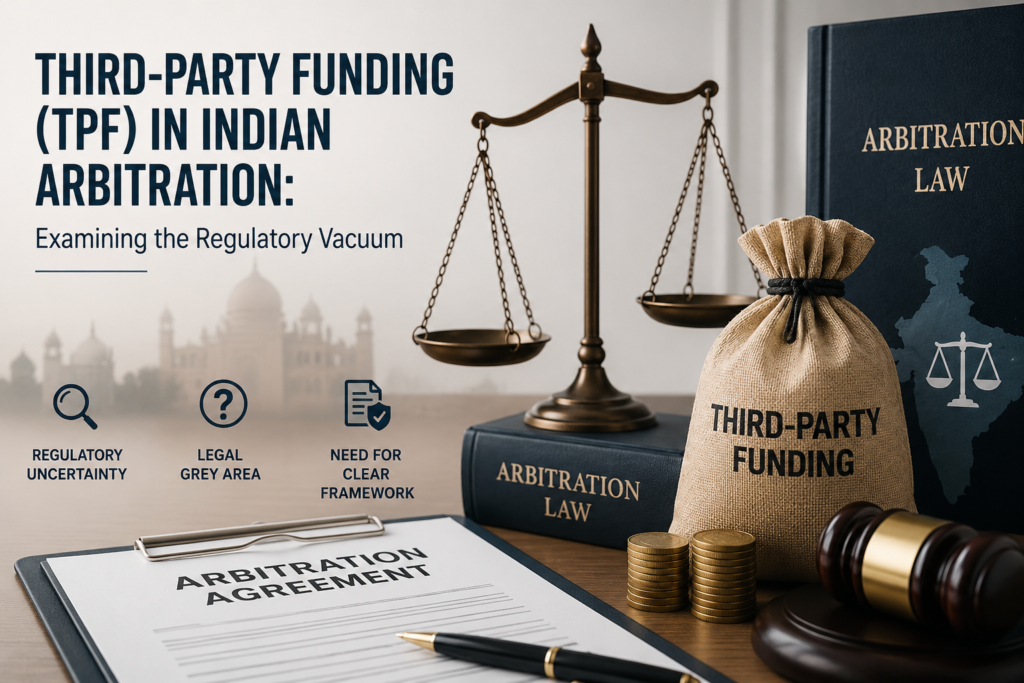
Abstract Third-Party Funding (TPF) has emerged as one of the most significant developments in international arbitration. It enables a person or entity that is not a party to a dispute to finance the legal costs of one of the disputing parties in exchange for a share of the monetary award if the claim succeeds. TPF […]
Priority of Distribution (Waterfall Mechanism) under Section 53 of the Insolvency and Bankruptcy Code: Examining the Rights of Operational Creditors, Government Dues, and Secured Lenders
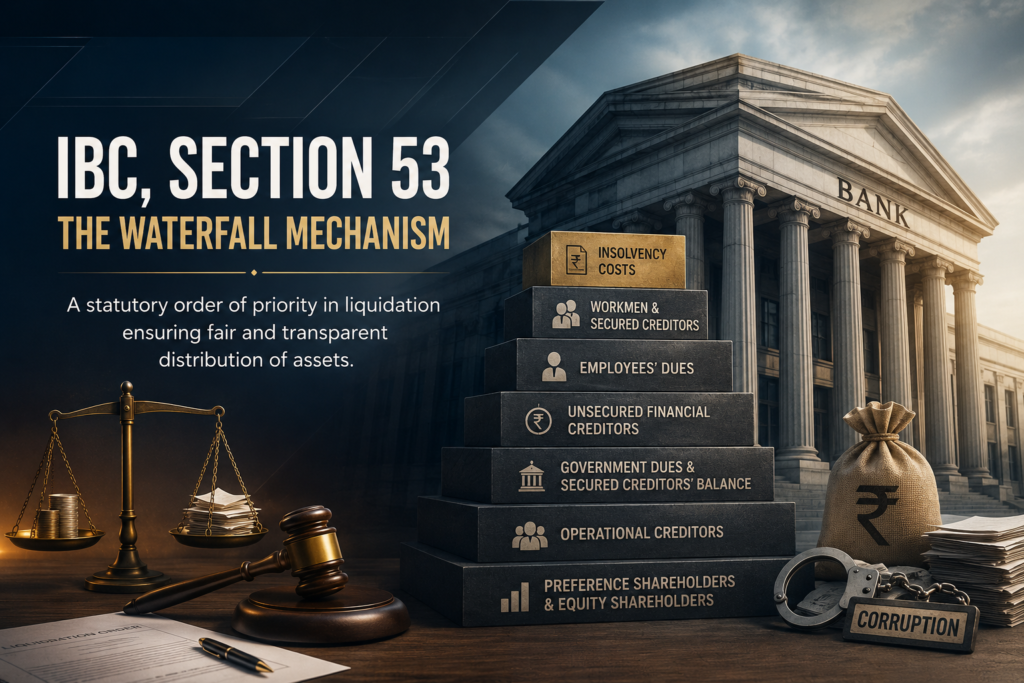
Priority of Distribution (Waterfall Mechanism) under Section 53 of the Insolvency and Bankruptcy Code: Examining the Rights of Operational Creditors, Government Dues, and Secured Lenders An Analytical Study of the Statutory Order of Priority in Liquidation under the Insolvency and Bankruptcy Code, 2016 1. Abstract Before 2016, a company sinking under debt in India had […]
THE LIABILITY VACUUM IN ARTIFICIAL INTELLIGENCE: A COMPARATIVE ANALYSIS OF ACCOUNTABILITY FRAMEWORKS WITH SPECIAL REFERENCE TO INDIA
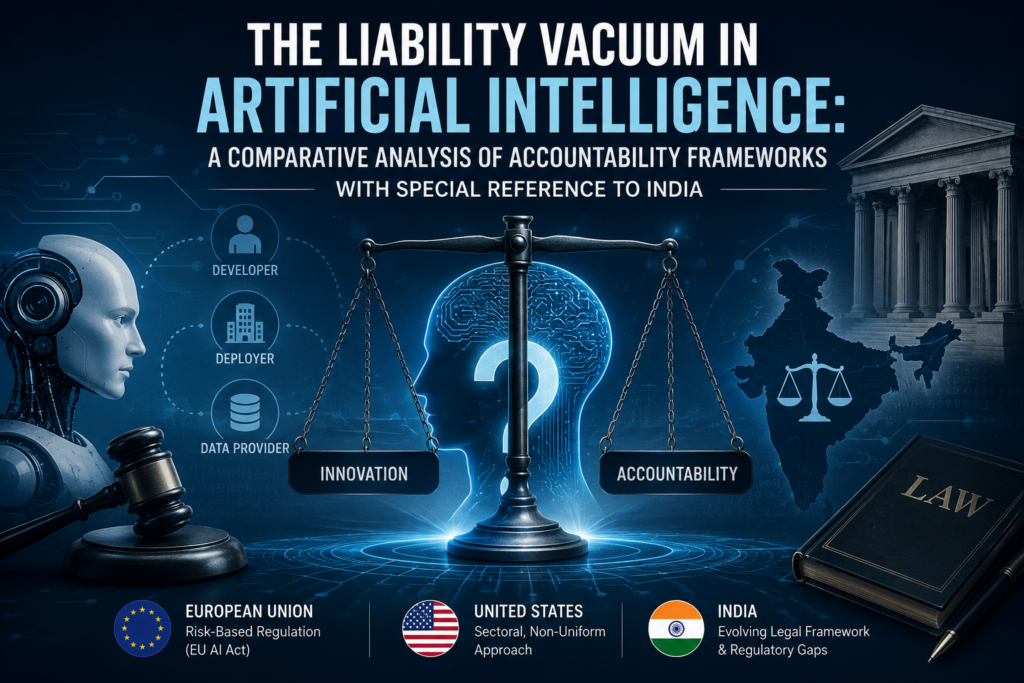
THE LIABILITY VACUUM IN ARTIFICIAL INTELLIGENCE: A COMPARATIVE ANALYSIS OF ACCOUNTABILITY FRAMEWORKS WITH SPECIAL REFERENCE TO INDIA ABSTRACT : Artificial intelligence systems have shattered the foundational assumption on which liability law rests: that identifiable human agency lies at the proximate end of every harmful act. As autonomous systems make consequential decisions through processes that are […]
Inside an NBFC Compliance Audit: Understanding PMLA, KYC, Customer Due Diligence and Director Liability

Author: Jayita Sharma Institution: The Law School, University of Jammu (1st Year, 2nd Sem) Designation: BALLB Student Current Position: Legal Intern, LawVaani The Audit Begins: When One Missing KYC Brings the ED to Your Door It is 9:15 on a Monday morning. The compliance team of a rapidly growing Non-Banking Financial Company (NBFC) is preparing […]
The New Economics of Play: Taxation and Financial Regulation of Online Gaming Under GST
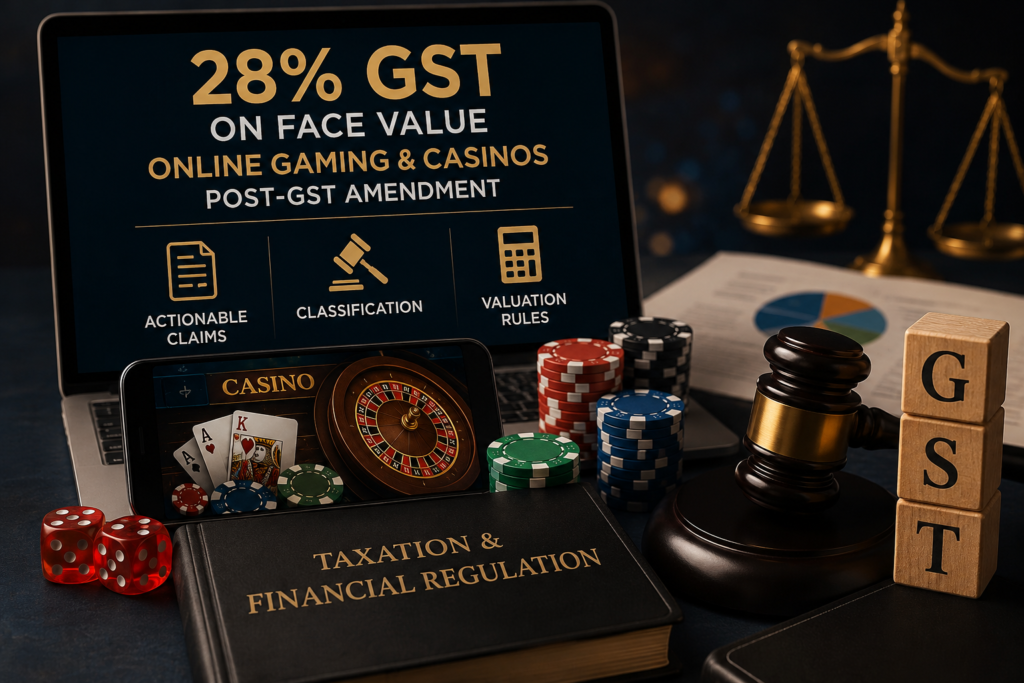
THE 28% TAX REDIME Abstract The taxation of online gaming and casinos has emerged as one of the most contested chapters in India’s Goods and Services Tax (“GST”) jurisprudence. What began as an interpretational ambiguity over whether stakes placed on digital platforms constituted a taxable supply has, over roughly four years, evolved into a full-blown […]
How to File an Application Before the Debt Recovery Tribunal (DRT) for Stay of E-Auction Under the SARFAESI Act, 2002
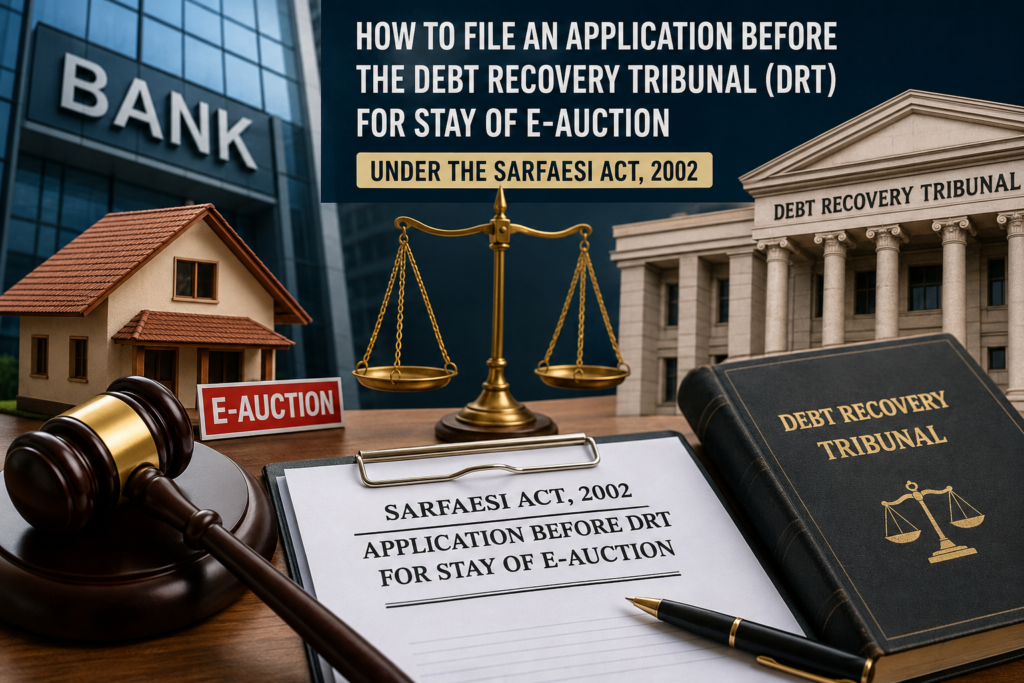
A Comprehensive Guide to Filing an Application Before the Debt Recovery Tribunal (DRT) for Stay of E-Auction Under the SARFAESI Act, 2002 Introduction The Securitisation and Reconstruction of Financial Assets and Enforcement of Security Interest Act, 2002 (SARFAESI Act) empowers banks and financial institutions to recover defaulted loans without approaching a civil court. One of […]