
Private Property and Business Losses During Demonstrations: Injunctions, Compensation and Insurance
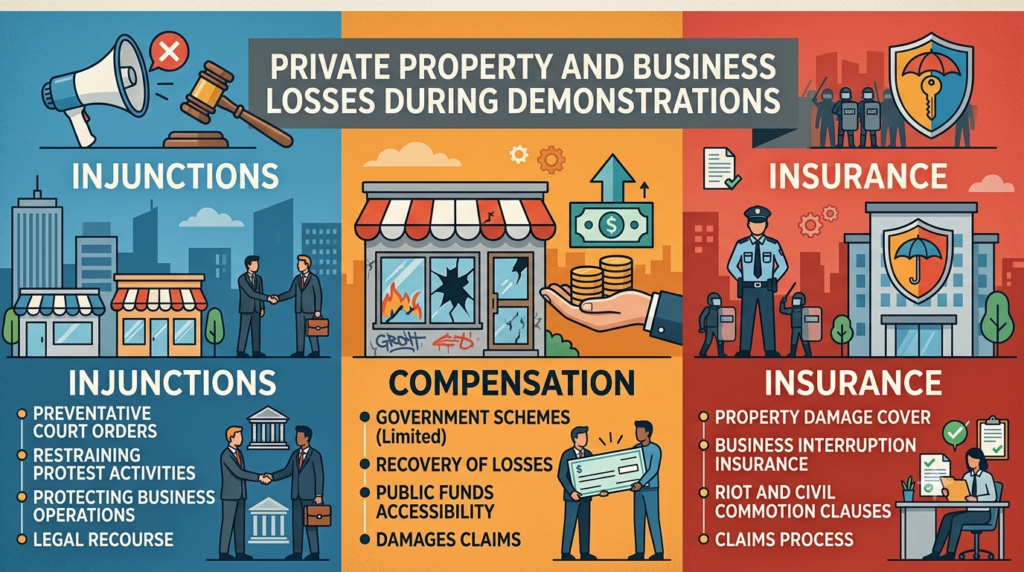
Abstract Demonstrations, protests, strikes, bandhs and public agitations are an important part of democratic participation. The right to assemble peacefully and express dissent is constitutionally protected in India, subject to reasonable restrictions. However, when a peaceful demonstration turns violent and results in destruction of private property, the legal consequences extend beyond criminal liability. Owners of […]
Account Attachment for Tax Recovery: Notice, Objection and Release Procedure
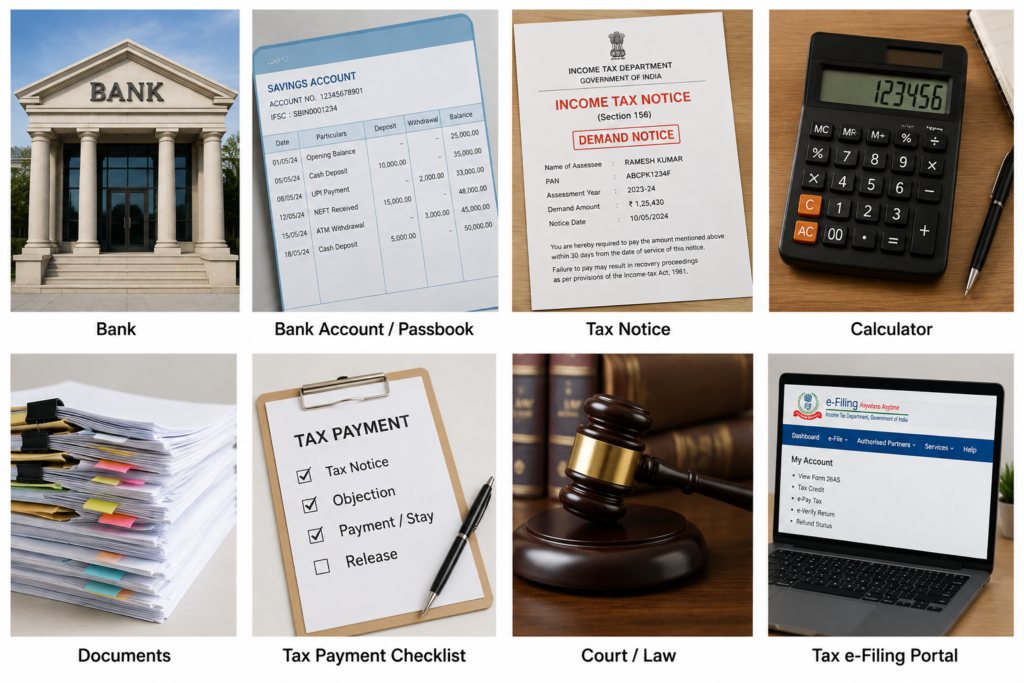
A tax attachment of your bank account is a legal freeze of money the bank holds for you, so that unpaid or anticipated tax can be recovered. In India, it usually follows a demand under Section 156 of the Income-tax Act, 1961, default under Section 220, and then either a Tax Recovery Officer’s certificate under […]
Cheque Bounce Case in Lucknow Under the Negotiable Instruments Act - Complete Legal Guide (2026)
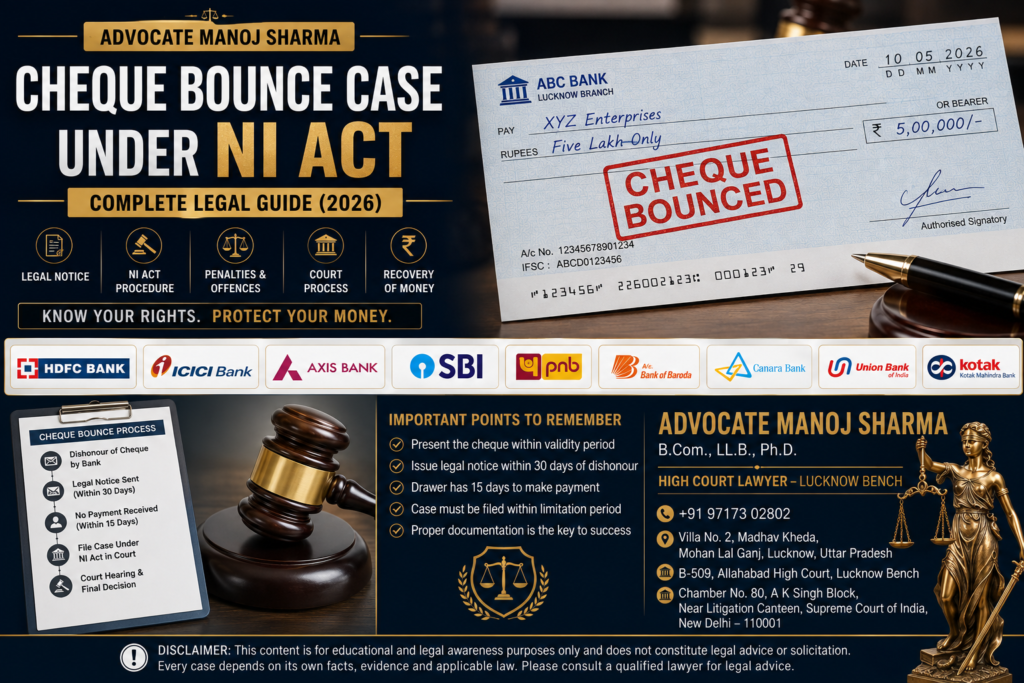
In today’s business environment, cheques continue to be widely used for business transactions, loan repayments, property deals, commercial contracts, rent payments, and personal financial commitments. However, when a cheque is returned unpaid by the bank, it can create serious legal and financial consequences. If you have received a cheque return memo or your cheque has […]
Cryptocurrency Regulation in India: Legal Challenges and the Need for a Comprehensive Framework

Abstract Cryptocurrency has developed from a relatively unfamiliar technological experiment into an important part of the global digital economy. India has not prohibited private cryptocurrencies, but it has also not recognised them as legal tender. Instead, the Indian legal approach has developed through taxation, anti-money-laundering requirements, regulatory warnings and administrative measures. This has created an […]
Cross-Border Insolvency under the UNCITRAL Model Law: Recognition, Cooperation and Protection of Creditors
“Cross‑Border Insolvency and the UNCITRAL Model Law” Author – Oviya Abstract & Introduction Cross‑border insolvency arises when a debtor has assets, creditors, or proceedings in multiple jurisdictions. Domestic insolvency laws are confined to national boundaries, making them inadequate for multinational businesses. The UNCITRAL Model Law on Cross‑Border Insolvency (1997) provides a harmonized framework for recognition […]
“Sovereign Debt Restructuring and International Law: Balancing Creditors’ Rights and Economic Self-Determination”

“Sovereign Debt Restructuring and International Law: Balancing Creditor Rights with Economic Self-Determination” Abstract: The increasing number of sovereign debt crises has highlighted significant weaknesses in the existing international debt restructuring framework. Growing cross-border financial transactions, complex borrowing patterns, and the absence of a comprehensive international legal mechanism have made sovereign debt restructuring more challenging than […]
Odious Debt in International Law: Should Successor Governments Be Bound by Illegitimate Sovereign Borrowing?
Odious Debt in International Law: Should Successor Governments Be Bound by Illegitimate Sovereign Borrowing? When a dictatorship falls or an occupying power withdraws, the loans that regime took out don’t disappear with it. Creditors still expect repayment, and international law has traditionally treated state debt as attaching to the state itself, regardless of who governs […]
Transfer Pricing and Arm’s Length Price in MNC Transactions: An Analysis of MAP, Safe Harbor Rules, and Transfer Pricing Audit Defence in India
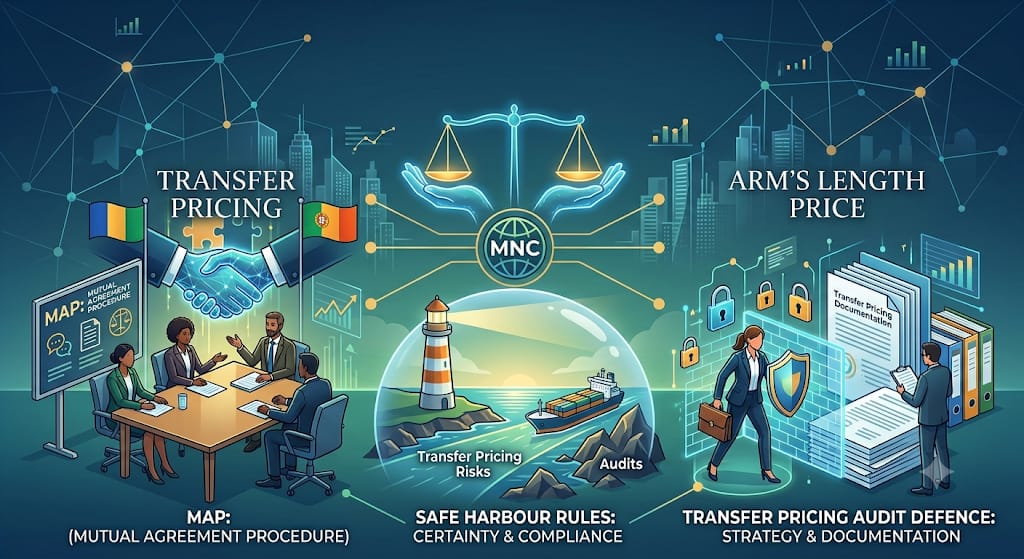
Transfer Pricing and Arm’s Length Price in MNC Transactions: An Analysis of MAP, Safe Harbor Rules, and Transfer Pricing Audit Defence in India Abstract The expansion of multinational enterprises has made transfer pricing a central issue in international taxation. As corporate groups increasingly conduct cross-border transactions through related entities, tax authorities must determine whether profits […]
Challenging Income Tax Reassessment Notices under Section 148: Procedural Lapses, Supreme Court Guidelines, and Judicial Review under Article 226
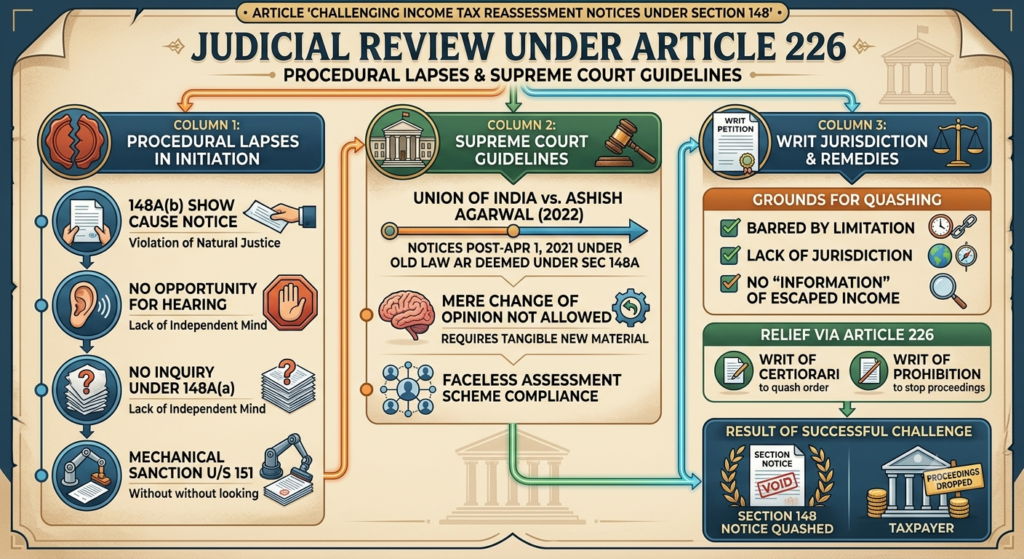
Challenging Income Tax Reassessment Notices under Section 148: Procedural Lapses, Supreme Court Guidelines, and Judicial Review under Article 226 Author – Saachi Srivastava Abstract The reassessment process envisaged under the Income Tax Act, 1961, has assumed significant importance in the context of maintaining the balance between revenue collection and taxpayer rights. While the 2021 Finance […]
Third-Party Funding (TPF) in Indian Arbitration: examining the regulatory vacuum
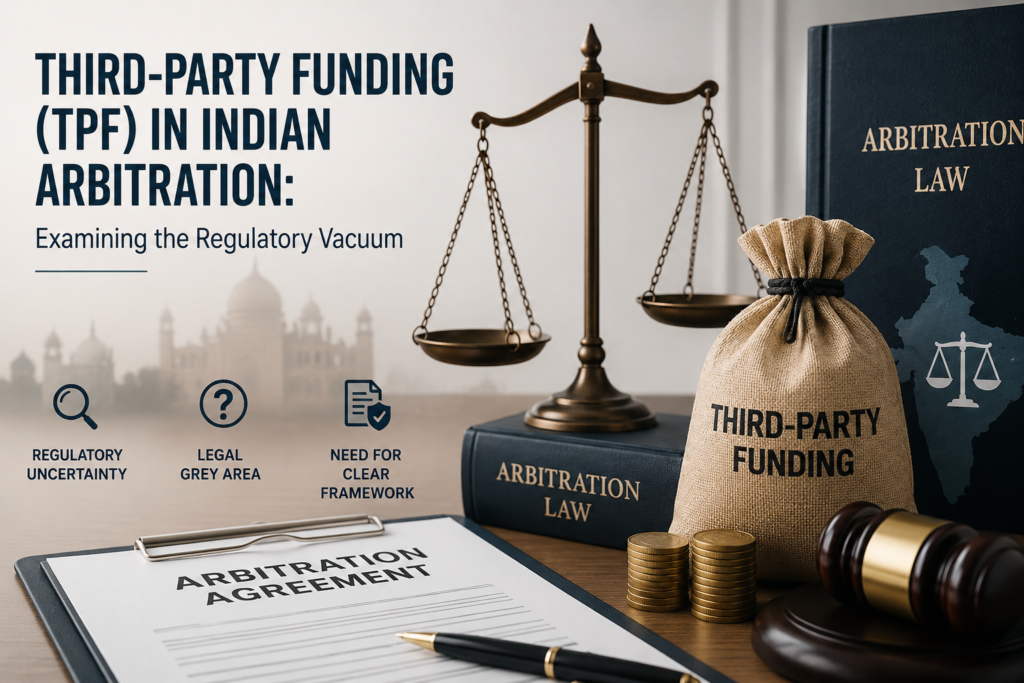
Abstract Third-Party Funding (TPF) has emerged as one of the most significant developments in international arbitration. It enables a person or entity that is not a party to a dispute to finance the legal costs of one of the disputing parties in exchange for a share of the monetary award if the claim succeeds. TPF […]