
Reclaiming Public Vision: Urban Aesthetic Rights and the Institutional Failure of Visual Pollution Governance in Indian Cities
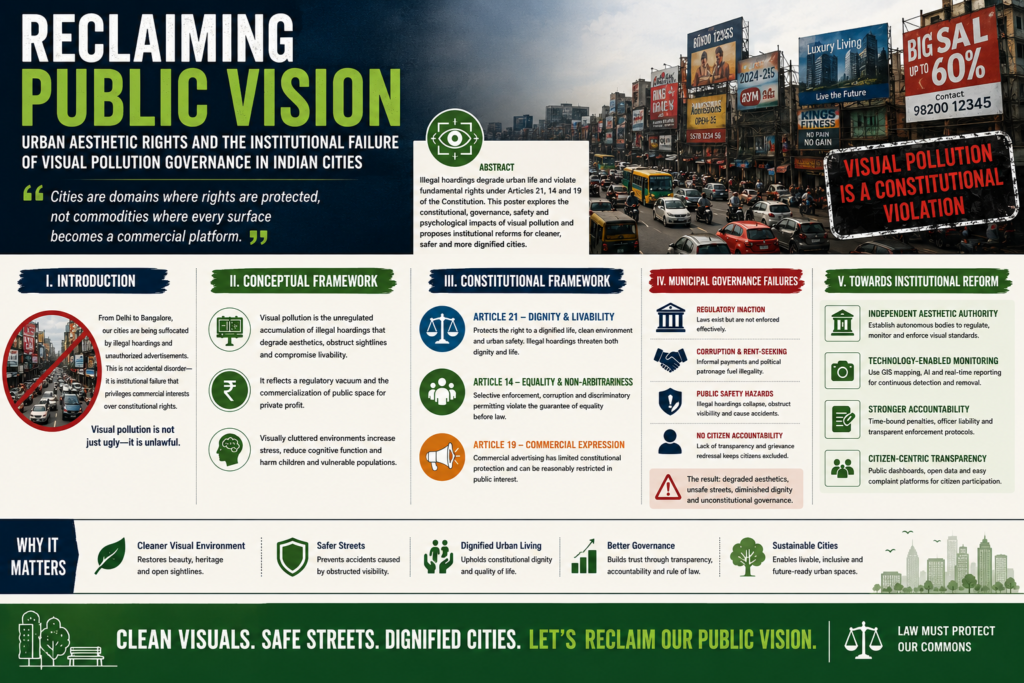
Abstract Urban visual pollution through illegal hoardings represents a systemic constitutional violation with profound governance implications. This article argues that unchecked visual degradation violates residents’ fundamental rights under Article 21 (dignity and livability), Article 14 (equality and non-arbitrary governance), and Article 19 (balanced commercial expression), while constituting a manifestation of municipal malfeasance. Through constitutional analysis, […]
HOW TO REGISTER AN NGO AS A SECTION 8 IN COMPANY IN 2026

INTRODUCTION In 2026, the Section 8 Company has emerged as the premier choice for NGOs in India, offering a blend of corporate professionalism and charitable intent. Unlike traditional trusts or societies, a Section 8 company is governed by the Companies Act, providing a high level of transparency that appeals to modern donors and corporate CSR […]
How to Report Tax Evasion Anonymously to the Income Tax Department in India (Complete Legal Guide)
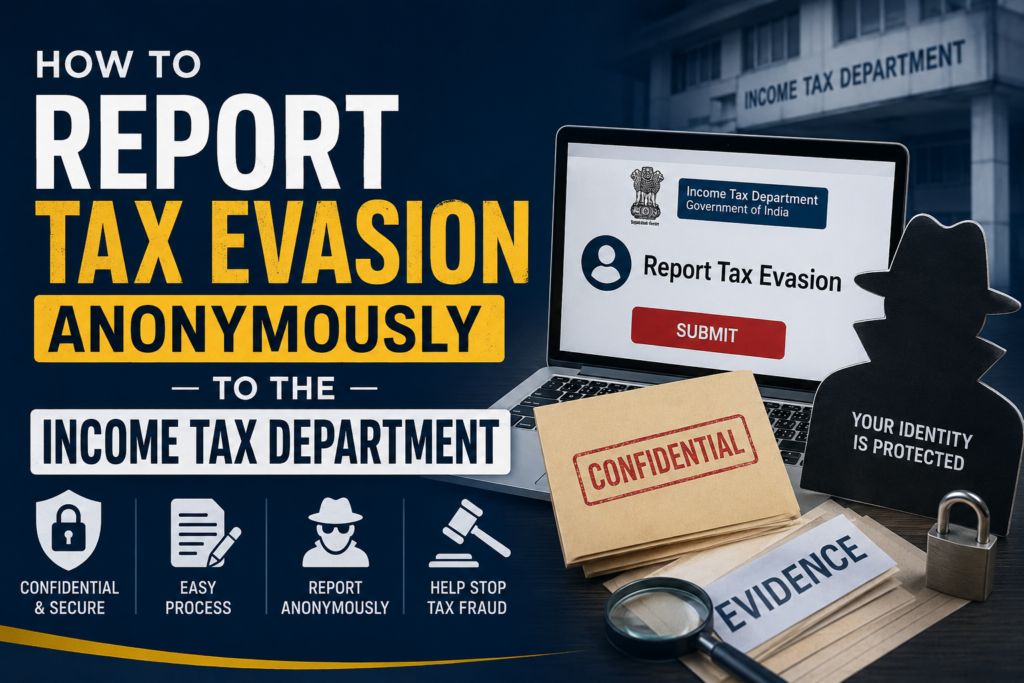
Introduction Tax evasion is a serious financial offence that affects the economy of the country. When individuals or businesses deliberately hide income, maintain fake accounts, avoid paying taxes, or deal in black money, it results in loss of government revenue. In India, the Income Tax Department allows citizens to report such illegal activities confidentially and, […]
Understanding the Maternity Benefit Act and the Leave Entitlements Available to Women in India: Law, Dignity, and Workplace Equality
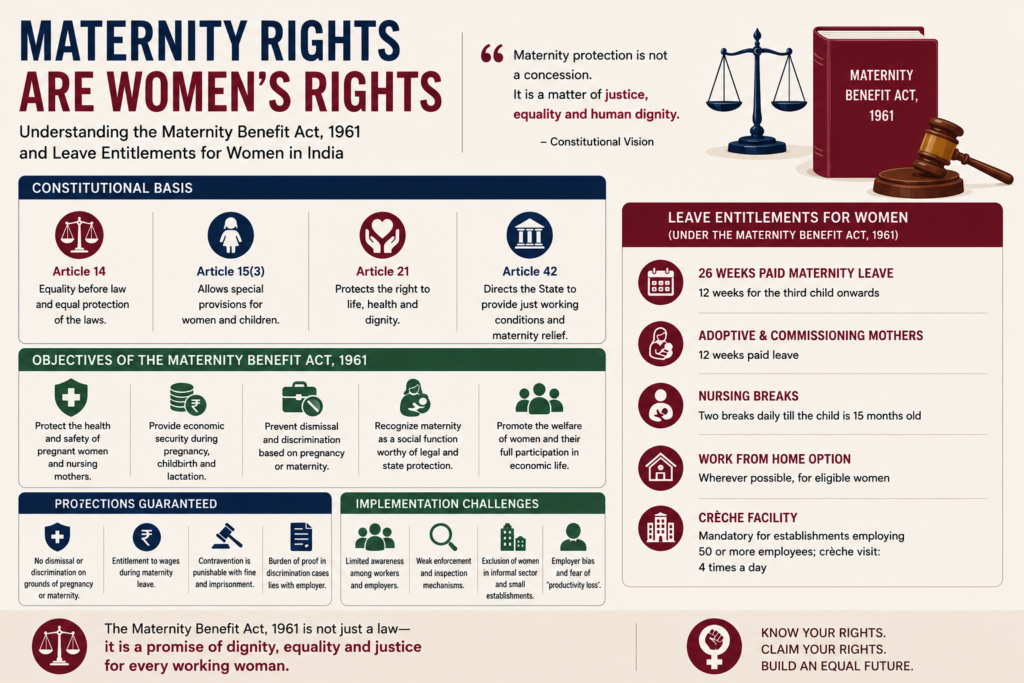
Abstract The Maternity Benefit Act, 1961, is a foundational framework within India’s labour law architecture that protects the reproductive autonomy and workplace dignity of working mothers. Nearly six decades after its enactment, and particularly following the significant 2017 amendment, this legislation exemplifies India’s constitutional commitment to substantive equality and the welfare state ideal embedded in […]
Condemned by Caste, Failed by Law: The Rights of Manual Scavengers and the Chasm Between Constitutional Promise and Ground Reality in India
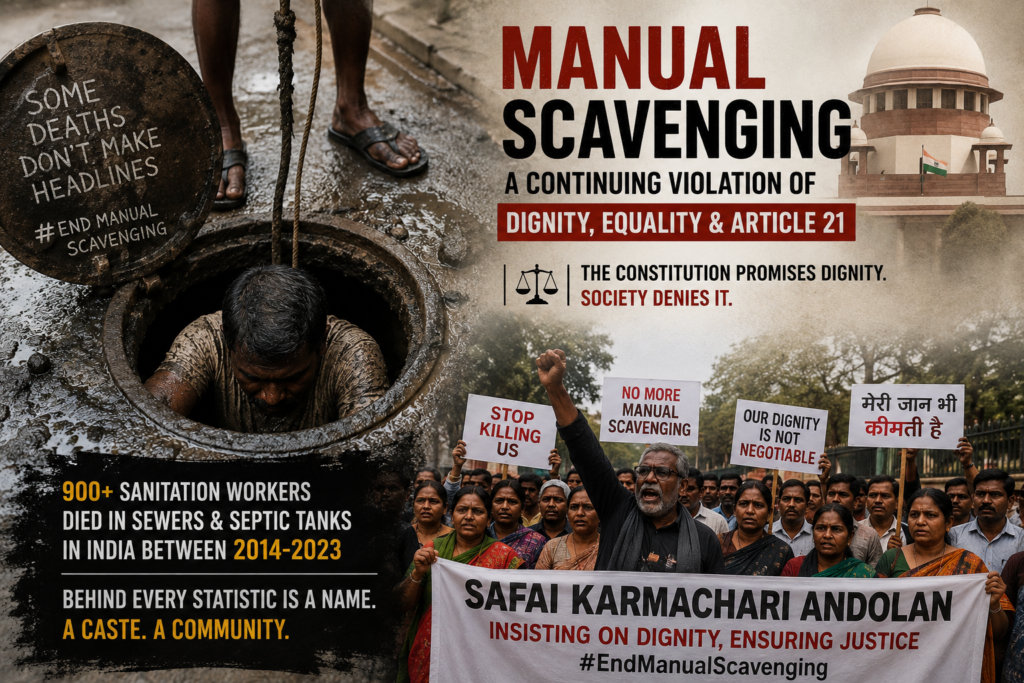
Abstract Manual scavenging—the manual removal of human excreta from dry latrines, sewers, septic tanks, and railway tracks—endures as one of the most constitutionally irreconcilable realities of contemporary India. Despite the unambiguous abolitionist mandate of Articles 14, 17, 21, and 23 of the Constitution of India, and the enactment of two successive legislative frameworks—the Employment of […]
What is Lok Adalat in India?

ABSTRACT This research study examines the attributes of Lok Adalat, sometimes referred to as Public Court or People’s Court in India, and its significance as a forum for alternative dispute settlement. Prior to the pre-litigation phase of a court action, it is commonly known as the “mediation forum.” The research piece […]
Condemned by Caste, Failed by Law: The Rights of Manual Scavengers and the Chasm Between Constitutional Promise and Ground Reality in India

Condemned by Caste, Failed by Law: The Rights of Manual Scavengers and the Chasm Between Constitutional Promise and Ground Reality in India Abstract Manual scavenging—the manual removal of human excreta from dry latrines, sewers, septic tanks, and railway tracks—endures as one of the most constitutionally irreconcilable realities of contemporary India. Despite the unambiguous abolitionist […]
How to Report Caste-Based Discrimination- A Practical Guide to the SC/ST (Prevention of Atrocities) Act, 1989

INTRODUCTION: When the Wound Has a Name Imagine waking up one morning and finding that someone has dumped animal carcasses at your doorstep — not as some random act of aggression, but as a calculated message about who they believe you are. Or picture a young woman fresh out of college, qualified and capable, told […]
REPORTING CYBERSTALKING AND ONLINE HARASSMENT TO THE INDIAN CYBER CRIME CELL: A PRACTICAL GUIDE

Introduction Cyberspace, or the virtual world, is the new reality of the era. It is a digital space creating a platform that connects people around the globe with the help of the internet. With features like better connection, accessibility, permanence, storage, and many more, the reliance on the digital world has become integral to day-to-day […]
THE NATIONAL SECURITY ACT, 1980: A GUIDE TO THE LAW AND ITS IMPACT

INTRODUCTION The idea of preventive detention in India, as seen in the National Security Act (NSA), 1980, challenges traditional ideas of liberty. At its core, the Act is preventive rather than punitive. Instead of punishing crimes already committed, it allows the state to act in advance to stop possible future harm. This reflects the idea […]