
Digital Arrest Scams in India: Analysing Criminal Liability under the Bharatiya Nyaya Sanhita, 2023, the Information Technology Act, 2000, and the Bharatiya Sakshya Adhiniyam, 2023
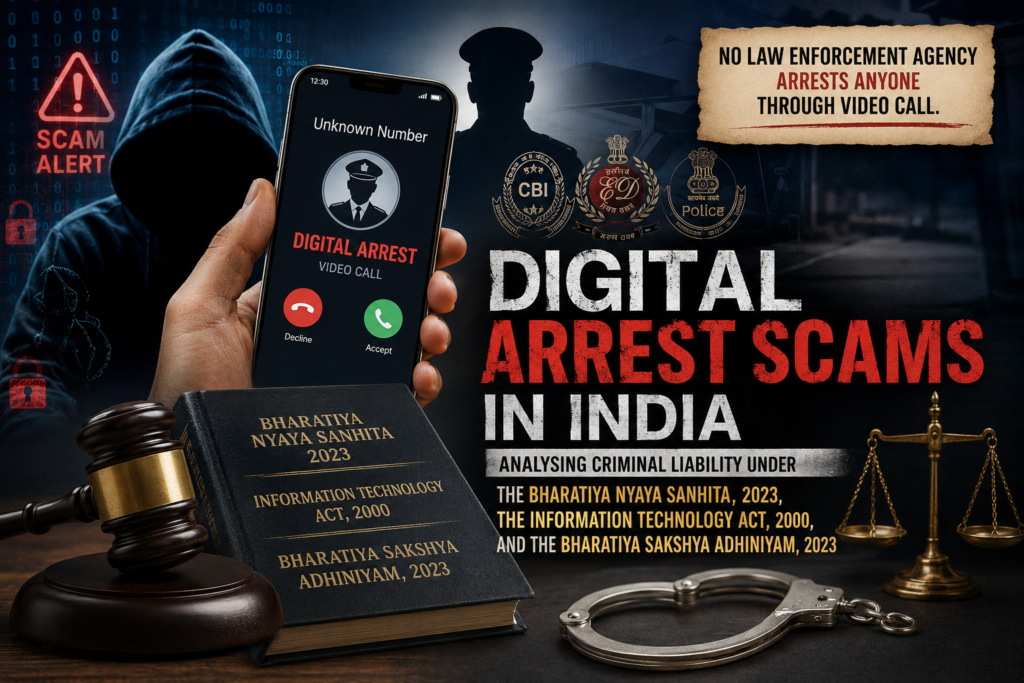
PART 1 Digital Arrest Scams in India: Analysing Criminal Liability under the Bharatiya Nyaya Sanhita, 2023, the Information Technology Act, 2000, and the Bharatiya Sakshya Adhiniyam, 2023 Author: Nitesh Dagar Abstract The rapid digitalisation of India’s financial and governance systems has significantly increased convenience for citizens. However, it has also facilitated the emergence of sophisticated […]
Paper Leak in India: Legal and Policy Challenges in Safeguarding the Integrity of Public Examinations
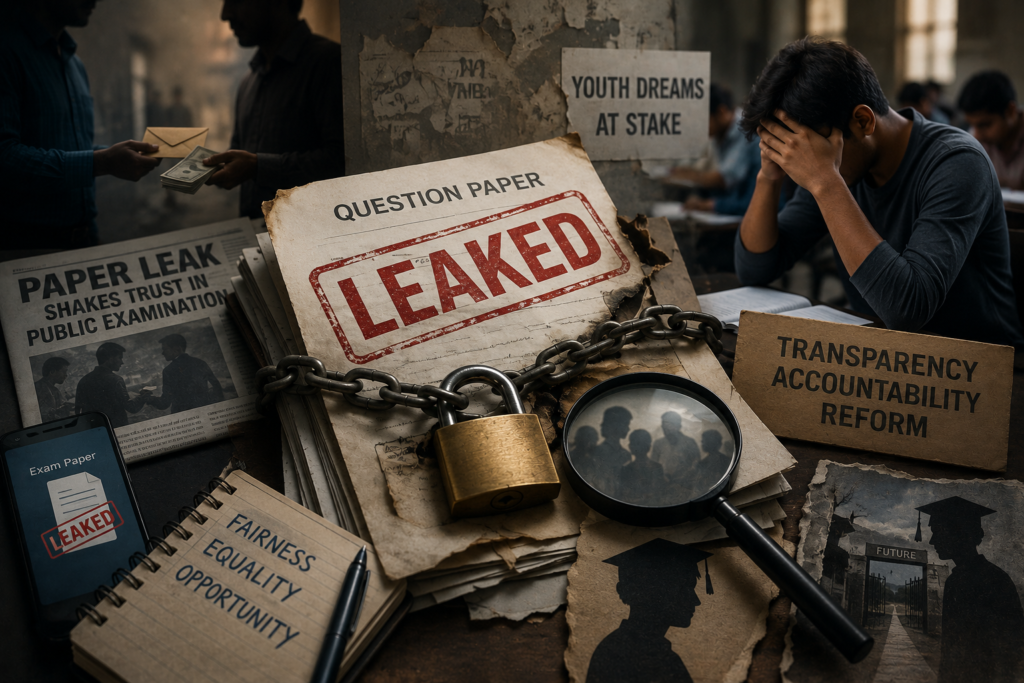
Paper Leak in India: Legal and Policy Challenges in Safeguarding the Integrity of Public Examinations Abstract Public exams are of vital importance when it comes to educational and professional prospects of millions of Indians[i]. On the other hand, the occurrence of paper leaks in competitive or recruitment exams is becoming a significant challenge for the […]
Legal Status of Live-in Relationships in Small Town India: Between Constitutional Freedom and Social Reality
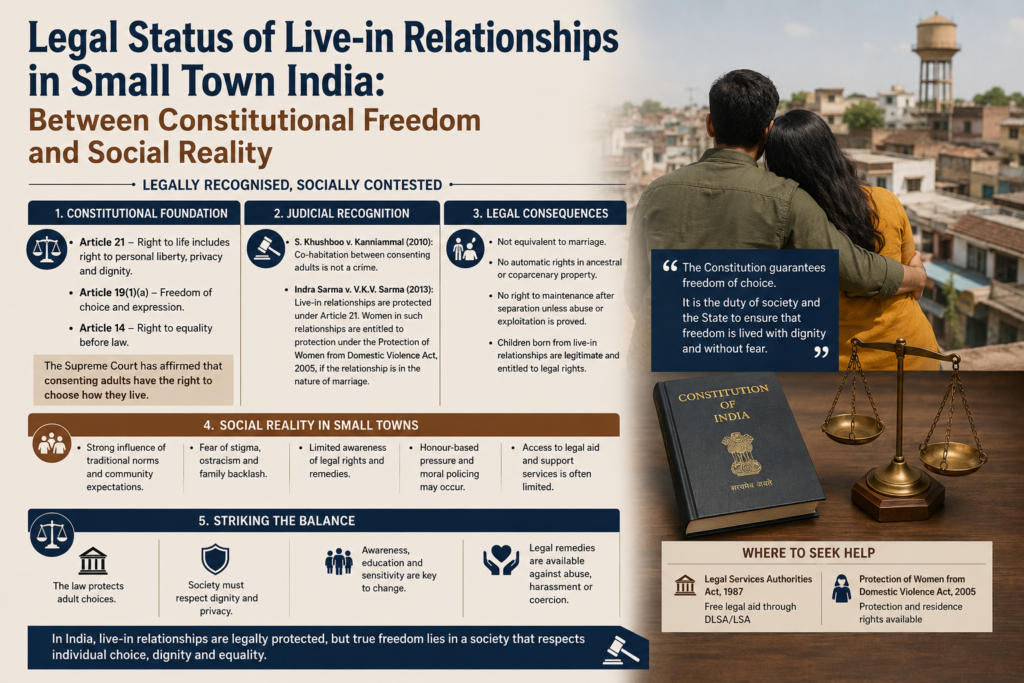
Legal Status of Live-in Relationships in Small Town India: Between Constitutional Freedom and Social Reality Introduction There is a clear increase in the number of live-in couples in the Indian society recently. The practice of living in has been accepted in many major cities of India such as Mumbai, Delhi, and Bangalore. But, the outlook […]
IF AN OFFENDER HIDES, HOW THE JUSTICE WILL BE DELIVER TO THE VICTIM?

ANALYSING THAT HOW OUR LEGAL SYSTEM IS STRUCTURED AND WILL THEY BE ABLE TO GIVE JUSTICE, IF A OFFENDER TRIES TO RUN AWAY. ABSTRACT : Think about a situation where someone has committed a crime against you and you as a responsible citizen took the matter in the court to get justice. Given the […]
REGULATORY FAILURE AND STUDENT SAFETY IN INDIA’S PRIVATE COACHING INDUSTRY: A LEGAL ANALYSIS
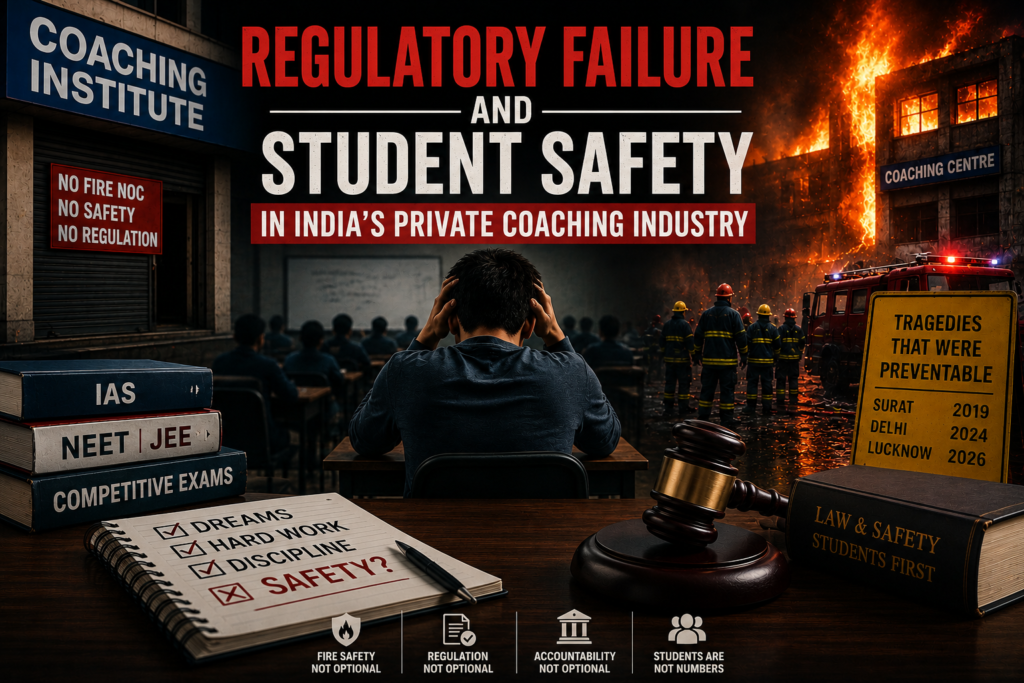
Abstract The private coaching sector in India, generates more than ₹58,000 crores each year in revenue, which has an enrollment of more than 71 million students. Currently, the regulatory structures in place are insufficient and incapable of responding adequately. Three avoidable tragedies – the Surat Fire (2019), the Delhi Basement Flood (2024), and the Lucknow […]
Online Defamation in the Age of Social Media: Balancing Reputation and Free Speech in India
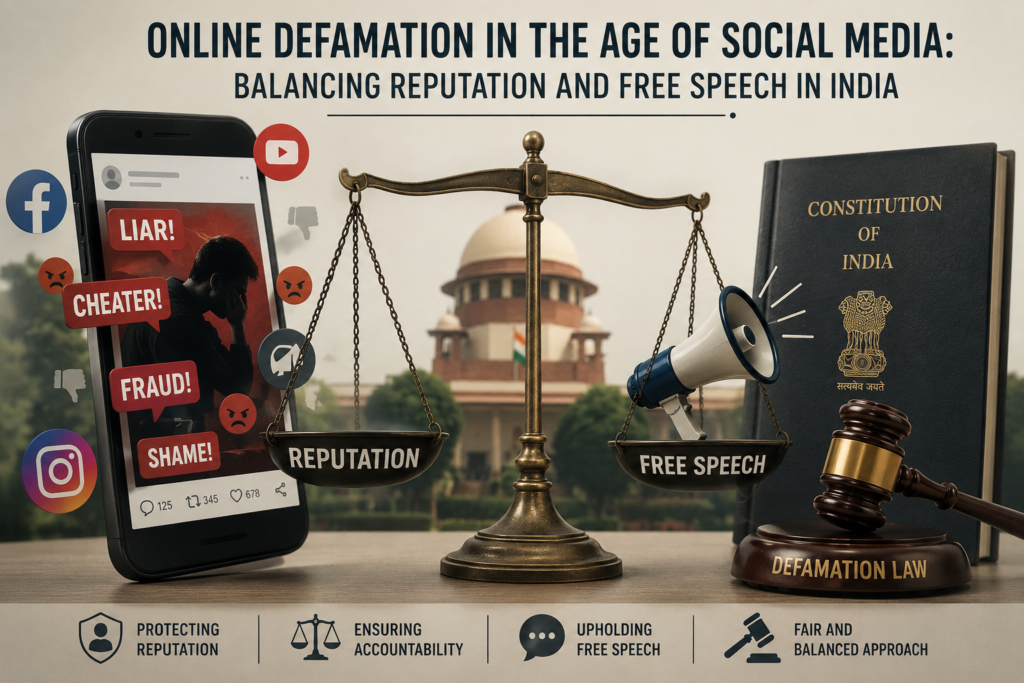
Online Defamation in the Age of Social Media: Balancing Reputation and Free Speech in India Introduction With the advent of social media sites, communication among people has undergone a sea change. Sites like Instagram, X (formerly Twitter), Facebook, and YouTube allow the user to share his views with the world at large through an instantaneous […]
AI-generated evidence in Indian criminal trials
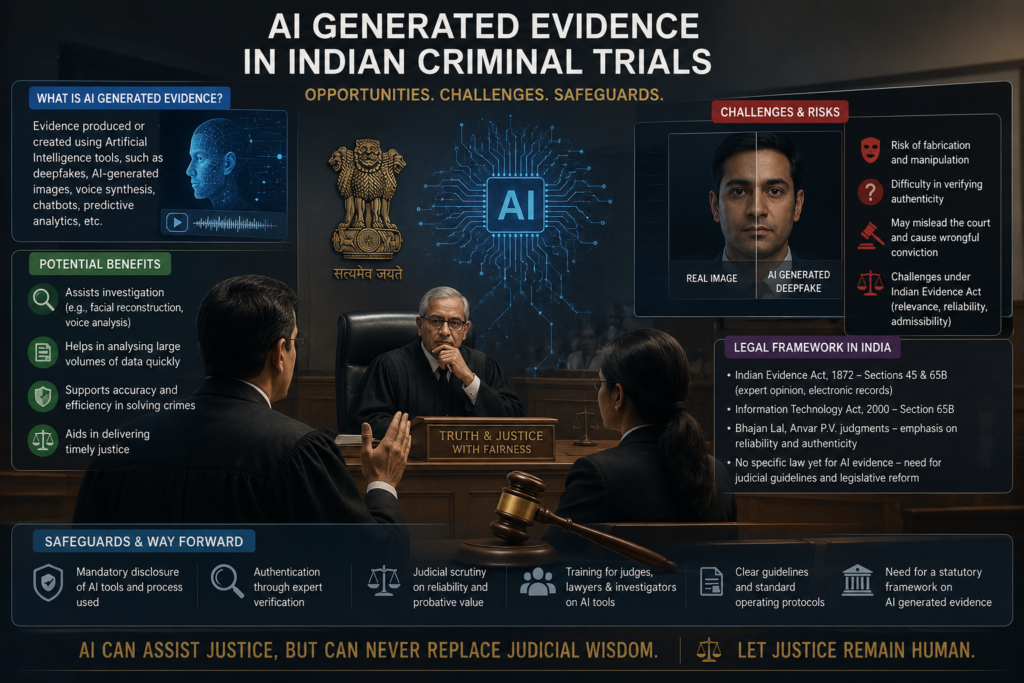
The Ghost in the Machine: Navigating AI-Generated Evidence in Indian Criminal Trials The quiet tap of a keyboard in a forensic lab now carries as much weight as a witness’s testimony in an Indian courtroom. As artificial intelligence (AI) evolves from a conceptual marvel into a daily investigative tool, the Indian judiciary faces a transformative […]
Bail as the rule, jail as the exception: Still a distant reality?

Introduction We all know that if a person does any crime, he or she will go to jail and would be punished. If the person is not guilty will go to court get justice. That person would be free. Meantime the person would ask for bail. But this not easy as it seems. In India […]
THE DUAL TRAGEDY OF MATRIMONIAL DISPUTES: ANALYZING BRIDE MURDER AND FATALITIES OF MEN IN INDIA

THE DUAL TRAGEDY OF MATRIMONIAL DISPUTES: ANALYZING BRIDE MURDER AND FATALITIES OF MEN IN INDIA 1.Introduction Matrimony has always been traditionally looked upon in India as a solemn and life long Sacrament than a purely civil contract. However today, matrimony has been reduced to a distorted morbid picture a rising graph of marital conflict […]
Policing the Colonial Order: State Crime, Settler Colonialism, and the Penological Architecture of Genocide

Abstract: In arguing for the inadequacy of a criminological theory of genocide, this article suggests that criminologists need to attend to the structures of colonial and settler colonial governance that both enable and explain the possibility of mass killings. With reference to state crime theory, postcolonial and decolonial perspectives, and the comparative history of colonial […]