
Uniform Civil Code in India: Balancing Equality, Religious Freedom, and Constitutional Pluralism
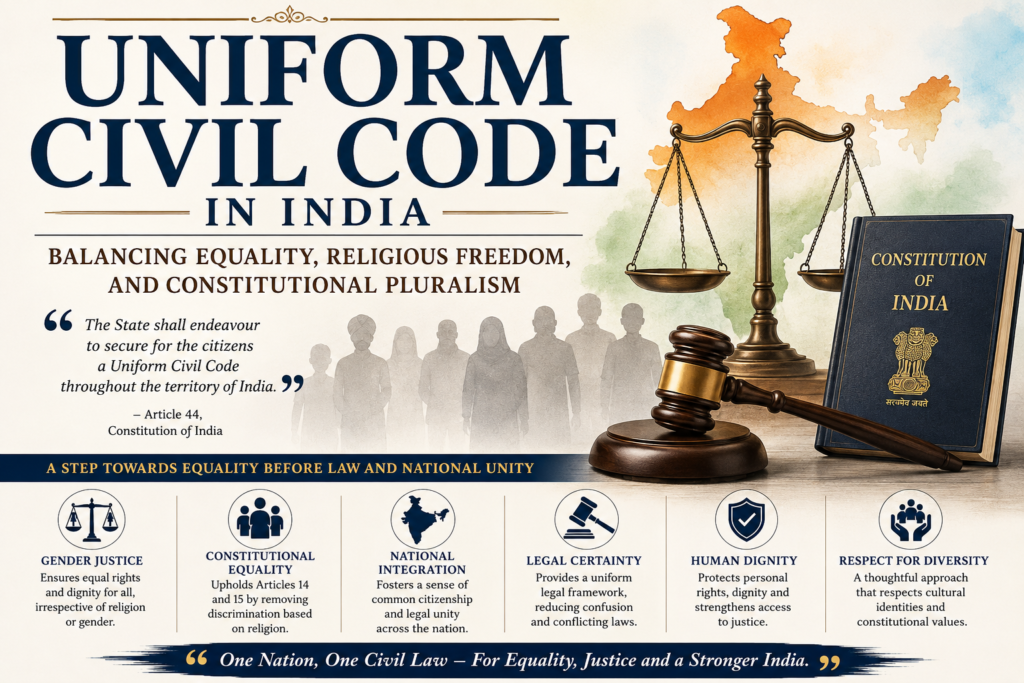
Abstract For years, India has wrestled with the idea of a Uniform Civil Code. Rooted in Article 44, it proposes replacing religion-based personal laws – on matters like marriage, divorce, inheritance, or adoption – with common civil rules for all citizens. Fairness between men and women is one reason supporters back it; so are more […]
THE DUAL TRAGEDY OF MATRIMONIAL DISPUTES: ANALYZING BRIDE MURDER AND FATALITIES OF MEN IN INDIA

THE DUAL TRAGEDY OF MATRIMONIAL DISPUTES: ANALYZING BRIDE MURDER AND FATALITIES OF MEN IN INDIA 1.Introduction Matrimony has always been traditionally looked upon in India as a solemn and life long Sacrament than a purely civil contract. However today, matrimony has been reduced to a distorted morbid picture a rising graph of marital conflict […]
Role Of Local Governments In Federal System
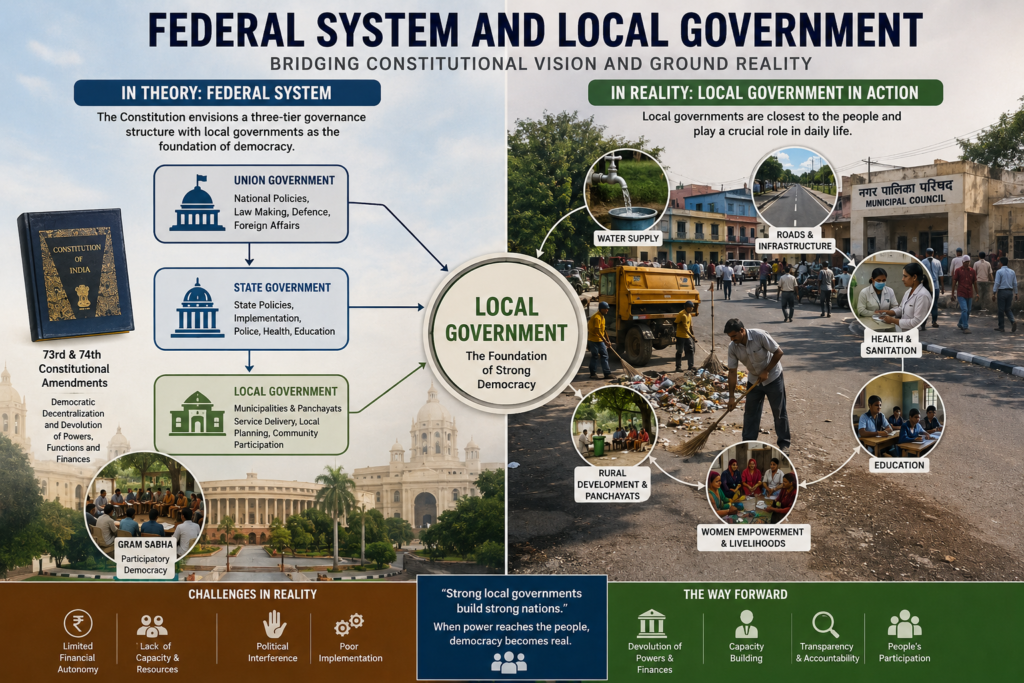
Introduction Federalism, in its classical sense, denotes a constitutional arrangement in which powers are divided between a central authority and constituent units, each operating within its own sphere. However, contemporary federalism has evolved into a more nuanced and layered system, incorporating local governments as a vital third tier. The inclusion of local governments is not […]
The Magistrate as a Gatekeeper of Criminal Justice: Re-examining Remedies Against FIR Refusal
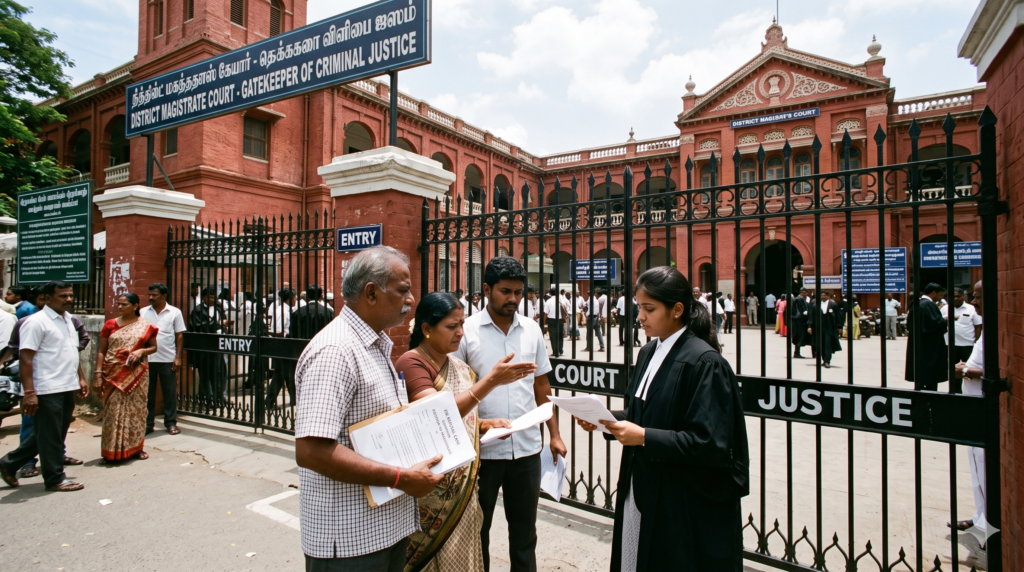
Introduction The registration of a First Information Report is the threshold act that admits a citizen into the machinery of criminal justice. Without a registered FIR for a cognizable offence, no formal investigation is triggered under law, no evidence is secured under statutory authority, and the informant’s account of the offence remains outside the legal […]
Police Verification in Passports

Introduction In an era defined by a push for digital efficiency, administrative processes in India have rapidly evolved. While daily life adapts to automated systems, state-regulated citizen mobility remains strictly grounded in legislative and constitutional frameworks. The most critical intersection of individual liberty, national security, and administrative vetting occurs during Police Verification. Often misconstrued as […]
Can Cooperative Housing Societies Refuse NOC for Sale of Flats? Legal Rights and Remedies

Abstract Nowadays, due to urbanisation and migration of people to different cities and states for employment, education has increased due to which the demand for flats and apartments has also increased because people cannot always buy land or build their own houses, thus they prefer flats and apartments. These flats are generally managed by […]
Medical Termination of Pregnancy (MTP) Laws for Unmarried Women in India and the Medical Termination of Pregnancy (Amendment) Act, 2021

Medical Termination of Pregnancy (MTP) Laws for Unmarried Women in India and the Medical Termination of Pregnancy (Amendment) Act, 2021 Introduction The right to reproductive choice is an essential aspect of a woman’s personal liberty, dignity, and privacy. In India, abortion is governed by the Medical Termination of Pregnancy (MTP) Act, 1971, which was enacted […]
Rights of Senior Citizens to Claim Maintenance from Grandchildren in India: Recent Legal Shifts A Comprehensive Legal Analysis of the Evolving Framework Under the MWPSC Act, HAMA, BNSS, and Supreme Court Jurisprudence

INTRODUCTION India’s elderly population is growing at an unprecedented rate, straining both family structures and the formal legal system designed to protect them. The joint family system—once the default mechanism for elder care—has fragmented. Grandchildren often reside in different cities or countries, complicating direct caregiving relationships. In this context, Indian law has emerged as the […]
Between Guideline and Gap: Custodial Search of Transgender Persons After the 2026 Amendment

Introduction: Transgender rights discourse has long centered on dignity, privacy, and bodily autonomy, with self-perceived gender identity treated as a constitutional baseline rather than a privilege to be earned. Yet procedural law, specifically the law governing physical search, has lagged far behind this principle. India’s search provisions, both under the erstwhile Code of Criminal Procedure […]
Contempt of Court in India: Meaning, Types, Actions Constituting Contempt, Exceptions, and Judicial Interpretation

Introduction The judiciary is one of the three pillars of a democratic state and plays a crucial role in maintaining the rule of law. For courts to effectively discharge their constitutional duties, their authority, dignity, and independence must be protected. The law of contempt serves this purpose by ensuring that judicial proceedings are conducted without […]