
The Constitutional Right to Peaceful Assembly under Article 19(1)(b): Scope and Limits

Abstract The Constitution of India guarantees several fundamental rights that form the cornerstone of a democratic society. Among these rights is the right to assemble peacefully and without arms, enshrined under Article 19(1)(b). This right enables citizens to express opinions collectively, participate in public discourse, protest governmental actions, and advocate for social, political, economic, and […]
Constitutional Safeguards Against Wrongful Arrests in India: Analyzing the BNSS Framework and Judicial Oversight.

Abstract Wrongful and arbitrary arrest remains one of the most persistent threats to personal liberty in India, striking directly at the guarantees enshrined in Article 21. This article examines the constitutional architecture protecting individuals from unlawful arrest, traces the evolution from the Code of Criminal Procedure (CrPC), 1973 to the Bharatiya Nagarik Suraksha Sanhita (BNSS), […]
WHEN VOICES BECOME MOVEMENTS: The Legal, Political and Social Triggers Behind Public Protest:

WHEN VOICES BECOME MOVEMENTS: The Legal, Political and Social Triggers Behind Public Protest Understanding why people take to the streets, how grievances evolve into collective action, and where the constitutional right to protest meets the limits of public order. ☆ ABSTRACT:- Protests are a powerful expression of collective public action, often emerging when individuals […]
Foreign Investment in Real Estate and Housing Rights: Regulating Speculation Without Breaching International Economic Obligations

Foreign Investment in Real Estate and Housing Rights: Regulating Speculation Without Breaching International Economic Obligations Author – Tamanna Verma Introduction The increasing global movement of capital has transformed real estate from a largely domestic asset into an international investment opportunity. Foreign investment in the real estate sector has contributed to economic growth by bringing […]
The Scope of State Exemptions under Section 17 of the DPDP Act, 2023: National Security Overrides, Surveillance Safeguards, and Article 21 Compatibility in India

ABSTRACT : We always give our data to government for some specific reasons as it is an requirement but at this time of digital governance when we hand over our information online in their official portal trusting it will serve a single, specific purpose. Have you ever thought what happens after you upload those data’s […]
Transparency on Trial: The Right to Information Act and Judicial Accountability in India
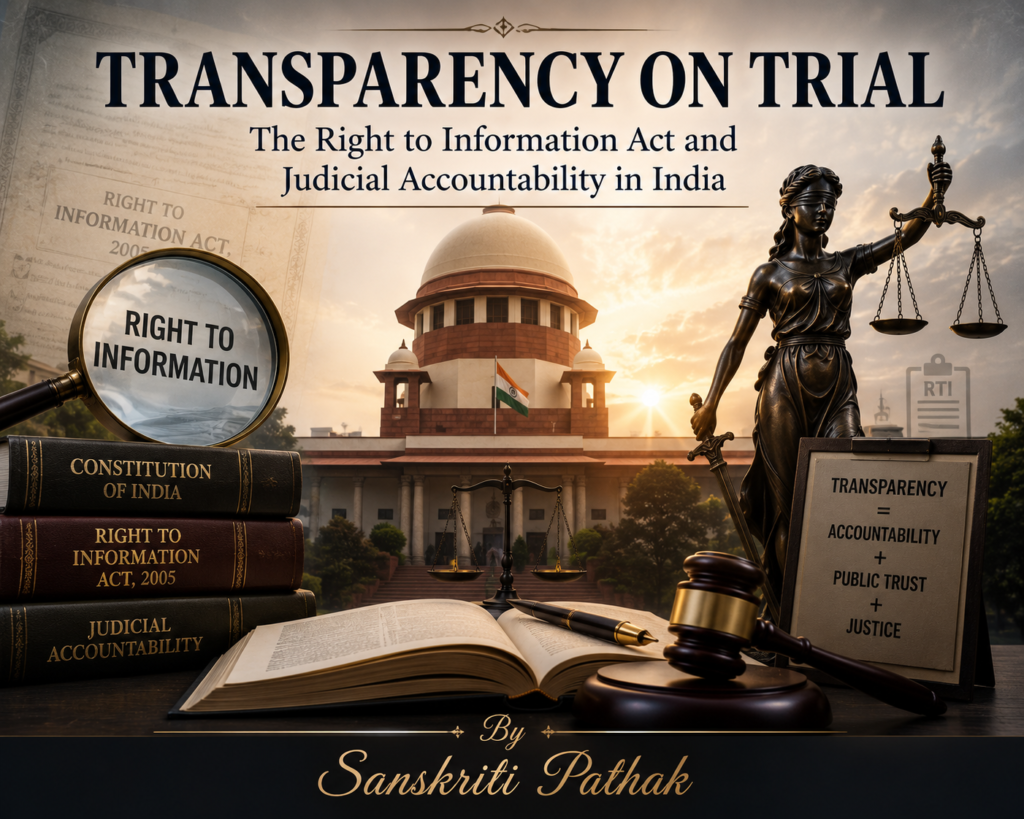
Transparency on Trial: The Right to Information Act and Judicial Accountability in India A Critical Analysis of Transparency, Judicial Independence, and the Public’s Right to Know Abstract The Right to Information Act, 2005 (RTI Act) represents one of India’s most transformative legislative measures aimed at promoting transparency, accountability, and participatory governance. By recognizing citizens’ right […]
From Imprisonment to Restoration: A Critical Analysis of Community Service as a Non-Custodial Sentence under the BNS and BNSS, 2023
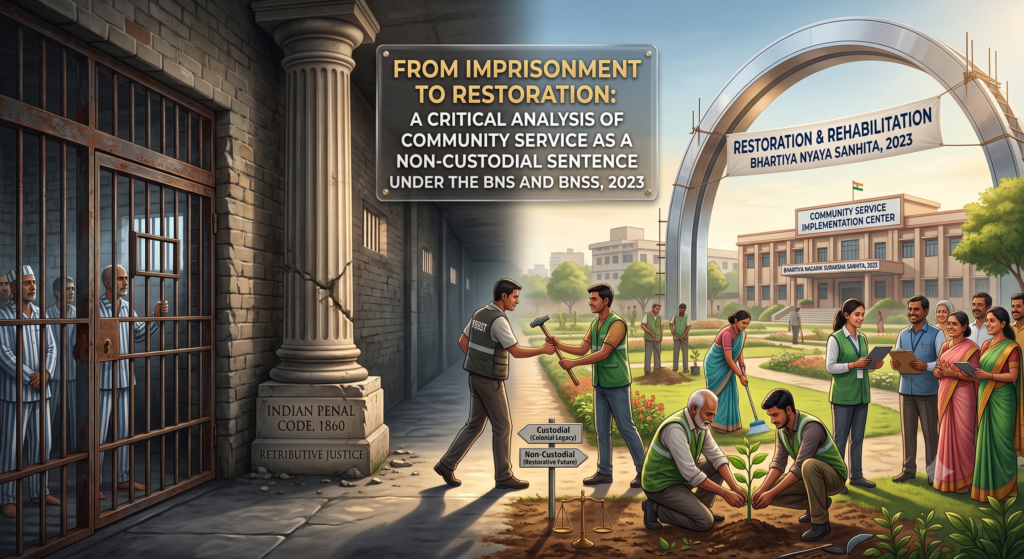
Introduction India’s prison system is in crisis. As of December 2022, the National Crime Records Bureau’s Prison Statistics India report recorded an overall prison occupancy rate of 131.4%, meaning that Indian prisons collectively held a third more inmates than their combined capacity. Undertrials persons awaiting trial who have not been convicted of any offence accounted […]
The Gig Economy and Informal Child Labour: Has the Law Failed to Evolve?

THE GIG ECONOMY AND INFORMAL CHILD LABOUR: HAS THE LAW FAILED TO EVOLVE? INTRODUCTION In November 2023, a BBC investigation reported the death of Leo, a teenager who had first started delivering food at fifteen and was killed at seventeen, riding a borrowed motorbike, still working under a Deliveroo account registered in an adult’s name. […]
Is It Legal for a Landlord to Disconnect Your Electricity or Lock You Out Over Rent Disputes?

ABSTRACT The practice of landlords disconnecting electricity or changing locks to coerce tenants into vacating premises during rent disputes describes a fundamental challenge to the rule of law and constitutional governance in India. This paper examines the legality of such “self-help” eviction tactics, arguing that they constitute a clear violation of constitutional guarantees, statutory protections, […]
What are the legal boundaries of the ‘Right to be Forgotten’ for expunging past criminal records online?
Abstract In the digital age, information published on the internet often remains permanently accessible, creating significant challenges for individuals seeking rehabilitation after involvement with the criminal justice system. Search engines, online news portals, and legal databases continue to display criminal records long after acquittal, completion of sentence, or closure of proceedings, thereby affecting employment opportunities, […]