
Business and Human Rights in Global Supply Chains: Mandatory Human Rights Due Diligence and Corporate Civil Liability
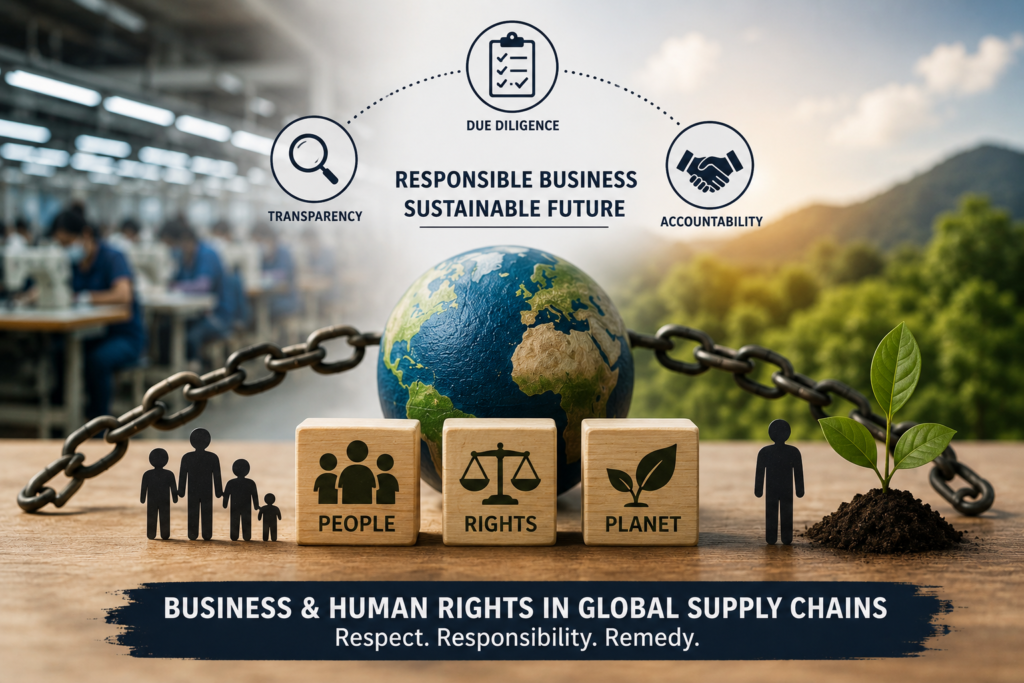
Introduction In today’s globalized world, the business landscape is characterized by a high degree of interconnectivity. Firms rely on a vast network of suppliers and manufacturers located across the world to produce goods and bring them to market. This dynamic has facilitated organizational productivity, but at what cost? Exploitative working conditions, unsafe environments, child labor, […]
Duties and Potential Liability of Protest Organisers for Crowd Conduct and Public Safety

Introduction The right to protest is constitutionally protected and politically foundational. A democracy without effective channels for popular dissent is a democracy only in form, and the Supreme Court of India has repeatedly affirmed that the freedom to assemble and to express collective grievance falls within the core of the fundamental rights guaranteed by Articles […]
ENFORCEABILITY OF EMERGENCY ARBITRATION AWARDS IN INDIA: MAPPING THE POST-AMAZON V. FUTURE RETAIL LANDSCAPE, ENFORCEMENT ROUTES, AND THE TEMPERAMENT OF LOCAL COURTS
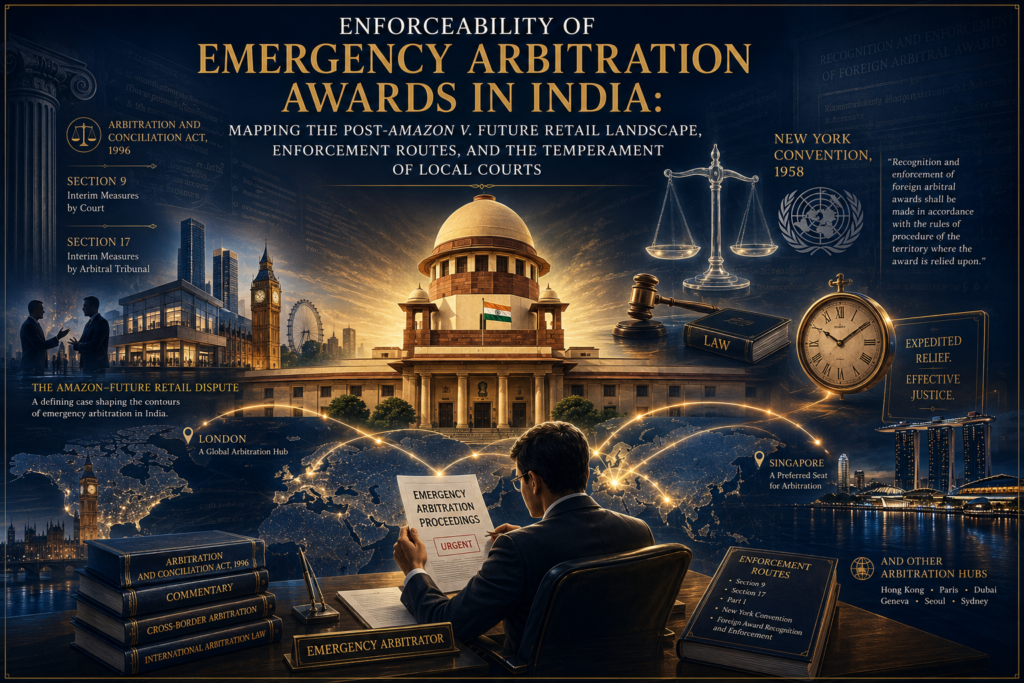
INTRODUCTION For more than a decade, the words “emergency arbitration” never appeared in the lexicon of the Arbitration and Conciliation Act, 1996. However, in fact since 2016 Indians, whether data, content or edible, are used to hearing about “emergency arbitration” owing to the fact that global institutional rules (SIAC, ICC, LCIA) had already incorporated emergency […]
Beyond the Game: Balancing Athlete Expression, Contractual Discipline, National Symbols, and Human Rights in Modern Sports

When Sport Meets Freedom of Expression Abstract The sporting arena has never been politically neutral. From Tommie Smith and John Carlos on the 1968 Mexico City podium to Colin Kaepernick kneeling on an NFL sideline in 2016, athletes have repeatedly used their visibility to speak on matters of racial justice, religion, and national identity. Each […]
Farmers’ Protests and Highway Occupations: Livelihood Claims, Mobility Rights and Negotiation

Abstract When farmers block a national highway to demand better prices for their crops, two important rights come face to face: the farmers’ right to protest peacefully and the general public’s right to move freely on public roads. This article looks at farmers’ protests and highway occupations in India as a distinct form of protest, […]
Stridhan Beyond Legal Recognition: Bridging the Gap Between Women’s Proprietary Rights and Practical Enforcement under Indian Family Law

Stridhan Beyond Legal Recognition: Bridging the Gap Between Women’s Proprietary Rights and Practical Enforcement under Indian Family Law you should rely on primary sources, reputed legal databases, and scholarly blogs rather than general websites. Abstract Stridhan occupies a unique position within Indian family law as a woman’s absolute and exclusive property, symbolising not merely material […]
Cross-Border Succession and Inheritance: Determining the Applicable Law for Immovable and Digital Assets in an Evolving Global Legal Order

Cross-Border Succession and Inheritance: Determining the Applicable Law for Immovable and Digital Assets in an Evolving Global Legal Order Author Uchit Kesarwani Law Intern, Law Vaani Abstract The recent increasing flow of people, capital, investments and digital assets across territorial boundaries has thus revolutionised succession law. One might not only have immovable […]
Anti-Suit Injunctions in Transnational Litigation: Comity,Parallel Proceedings and Judicial Restraint

Abstract- The increasing globalization of trade, commerce, investment, and digital transactions has significantly expanded transnational litigation. Parties frequently institute proceedings before courts in different jurisdictions, leading to parallel proceedings and conflicting judgments. Anti-suit injunctions have emerged as an important judicial mechanism to restrain parties from pursuing litigation in foreign courts where such proceedings are oppressive, […]
Third-Party Funding (TPF) in Indian Arbitration: examining the regulatory vacuum
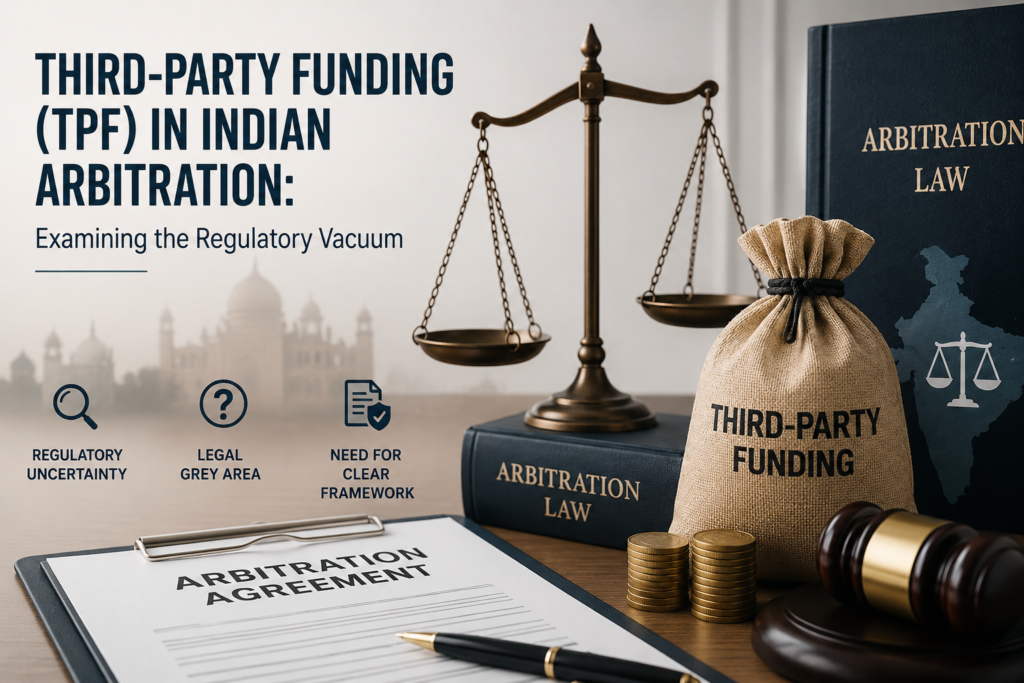
Abstract Third-Party Funding (TPF) has emerged as one of the most significant developments in international arbitration. It enables a person or entity that is not a party to a dispute to finance the legal costs of one of the disputing parties in exchange for a share of the monetary award if the claim succeeds. TPF […]
COOKIES AND TRACKING: CAN WEBSITES FORCE YOU TO ACCEPT THIRD-PARTY COOKIES WITHOUT YOUR EXPLICIT CONSENT?
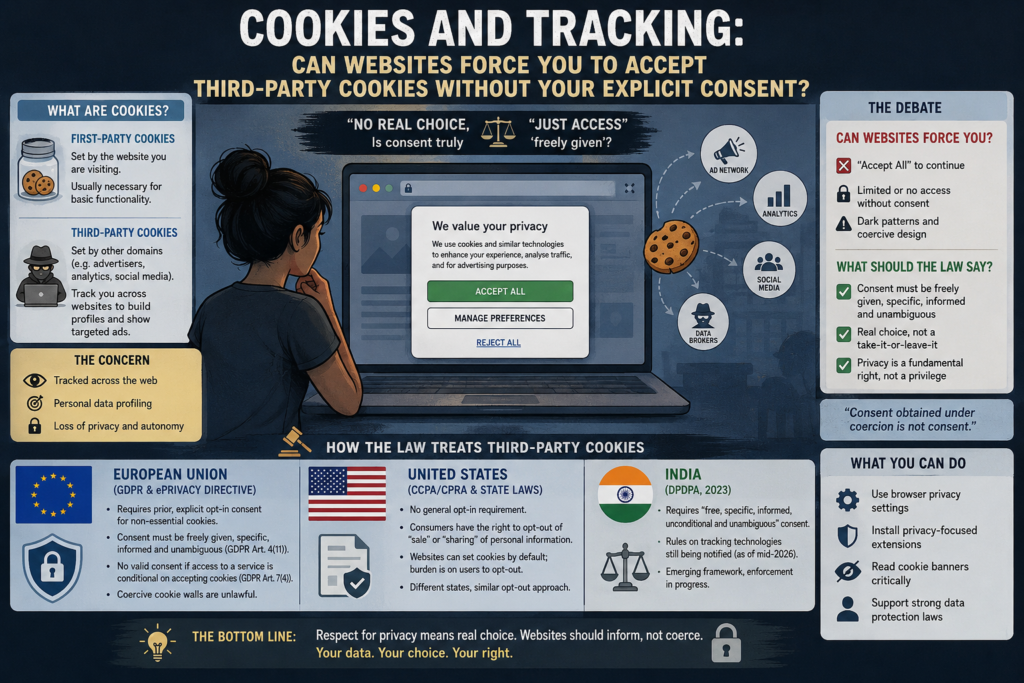
ABSTRACT / INTRODUCTION The cookie banner is modest, but it rests on a very old jurisprudential question: what can it possibly mean that a person ‘consents’ to something that she does not understand, that she cannot effectively refuse (having encountered it dozens of times that day) and that she may encounter again and again? In […]